The short version. Poster for most walls, framed poster if you want it finished and hung the day it arrives, canvas for a glare-prone wall, metal for a dark picture, wood for a warm one. Everything is made to order, so nothing exists until somebody buys it.
Paper, and why there is only one
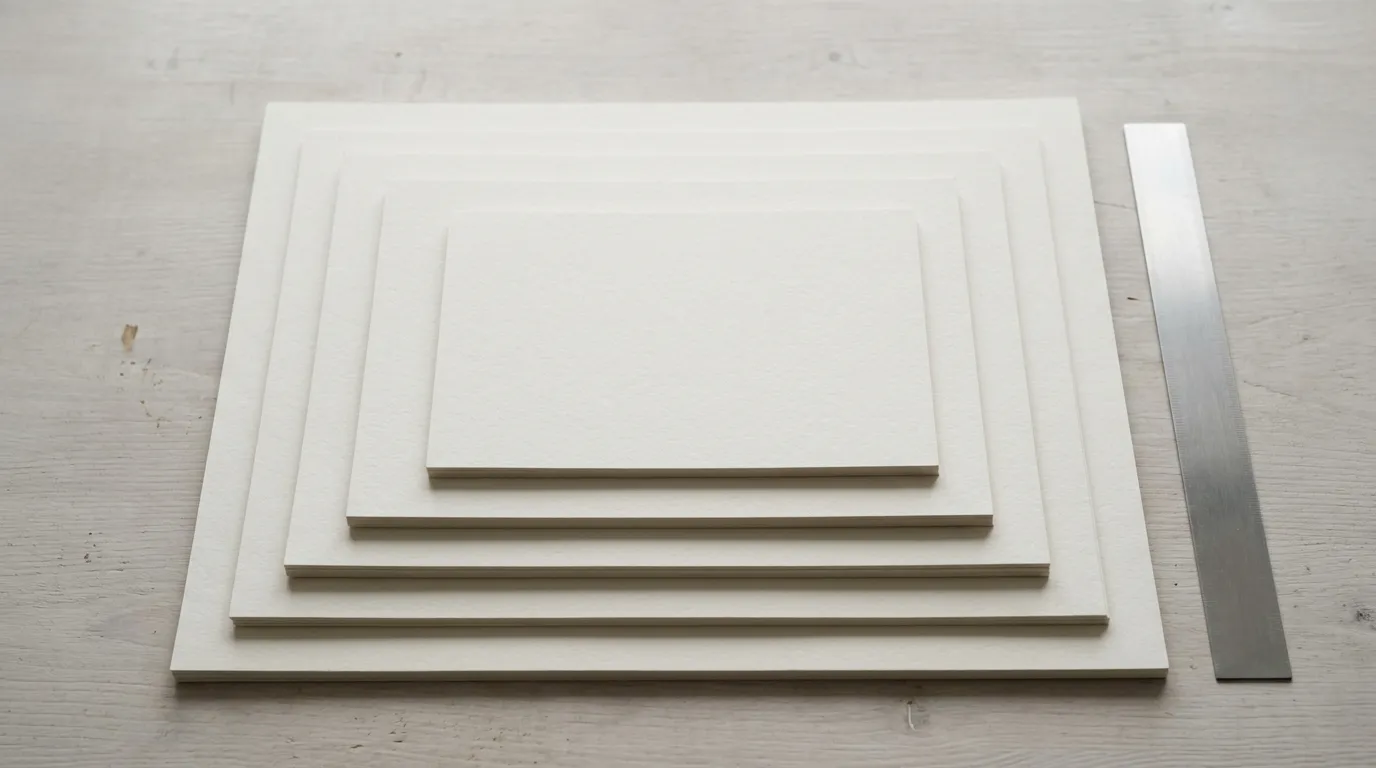
Every paper print here is on 250 gsm uncoated off-white archival stock. One paper, not a range, because a range is mostly a way of selling the good one at a premium. There isn't a better sheet hiding behind an upgrade price. Uncoated means no sheen, so the picture reads from an angle instead of turning into a mirror, and the off-white ground is warmer than a bright white and much kinder to the cream-and-ochre half of the collection.
Posters come at A4, A3, A2, 50 by 70 centimetres and 70 by 100 centimetres. The size guide is the page that works out which of those a particular wall wants, because it is not a question you can answer from a product listing.
Framed, and why only two sizes
Framed prints come at A3 and A2 and nowhere else. That isn't an arbitrary limit: the archival paper above only exists framed at those two sizes, and we would rather sell two sizes on the right paper than five on whatever paper happens to be available. The frame is wood, in black or natural wood, with plexiglass rather than glass, and it arrives ready to hang.
Nothing arrives with a mount, and which of the two colours suits which artwork is a longer conversation than belongs on this page. The framing guide has it.
Canvas and framed canvas
Canvas is stretched two centimetres deep over FSC-certified wood, in four metric sizes. Framed canvas puts that inside a floating wooden surround, in black, dark wood or natural wood, and it is the most finished object here and the heaviest.
Choosing canvas is really one decision about light and one about surface, and the canvas page works through which six of the twenty-eight artworks actually gain from it.
Metal, wood and the rest
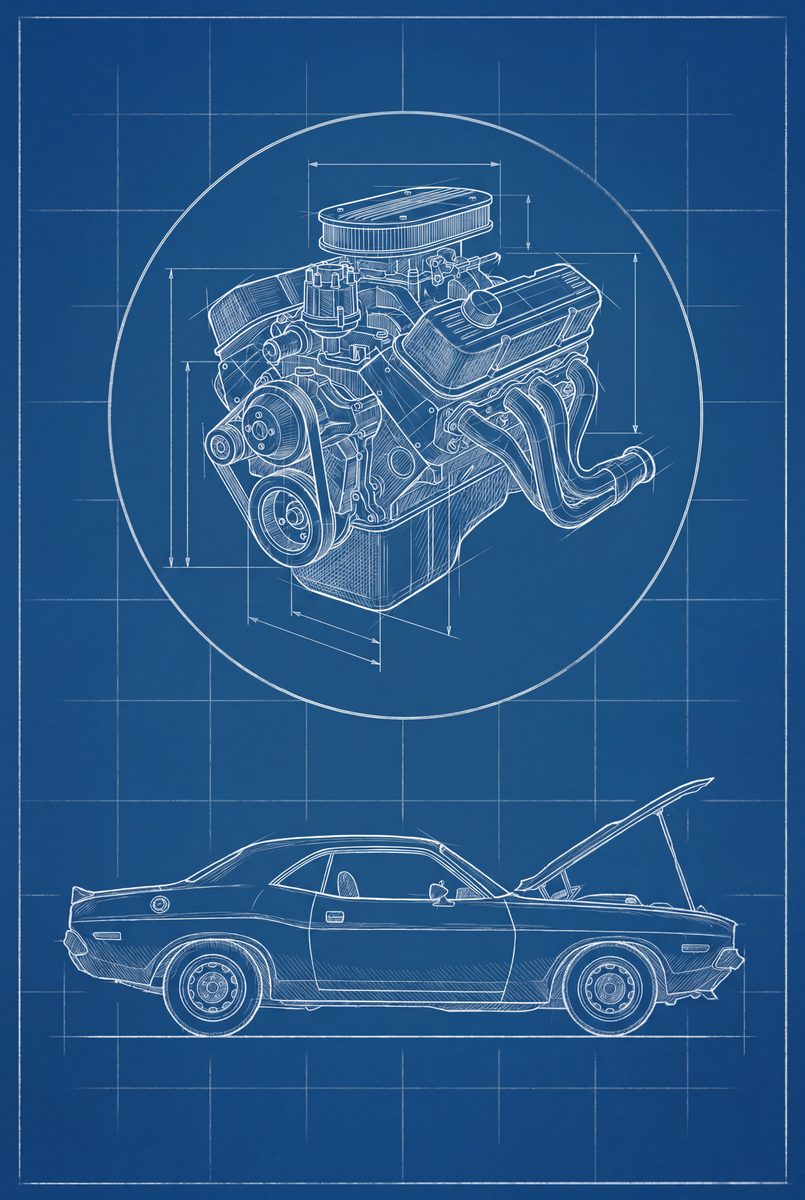
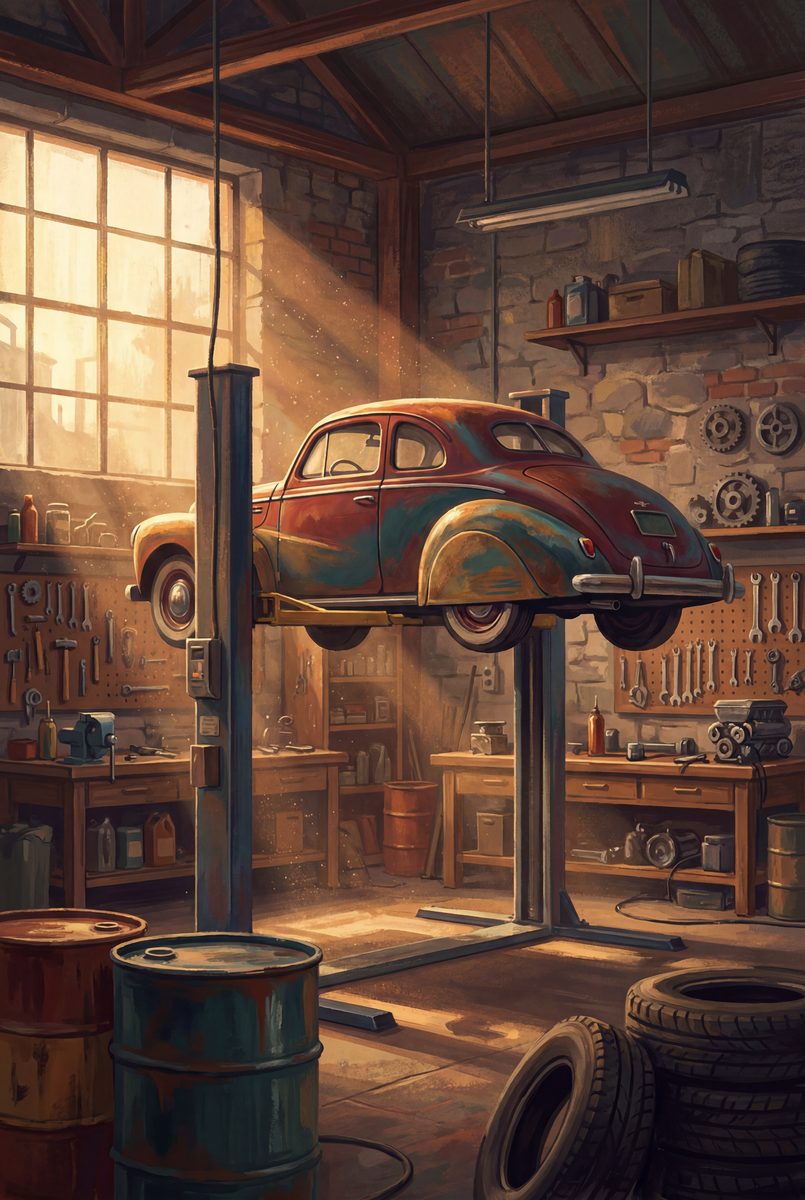
Metal is a three-millimetre panel at 30 by 40, 40 by 50 and 50 by 70 centimetres. It holds detail harder than paper and it suits the dark pictures, so the night drives are the obvious candidates. Wood is ten-millimetre lined plywood at 30 by 40 and 40 by 50, with the grain running horizontally and showing through the lighter areas, which is exactly wrong for a blueprint and exactly right for a workshop scene.
Then the small things: an eleven-ounce ceramic mug, a 500 millilitre stainless steel bottle, and a pack of ten folded A5 cards on 350 gsm silk. These are the same artwork at desk scale, and they are usually bought alongside a print rather than instead of one.
The tenth is not an object at all: a digital download, the artwork as a file for a frame you already own or a card you are making yourself. Nothing is printed and nothing is posted, which is the whole point of it.
Where each picture wants to go
The canvas page works through which of the paintings actually gain from a weave, and the garage page deals with the walls that are not in a house at all. If the room is the question rather than the format, the five room pages under by room start there instead.