Operator's manual — original car art
Petrol & Ink

Grand prix art, and the licence question.

A print of a real car in a real season's colours is licensed merchandise: the marks and the liveries belong to the people who own them, and a licence fee sits inside the price. We do not hold a licence, so this page is honest about what is here instead.

Explore Apex at Dawn: formats & prices ↗
Apex at Dawn
From this collectionApex at Dawn
Jump to a section · 3 sections

The short version. If you want a print of a specific car, in a specific season's colours, with a specific number on the nose, that is licensed merchandise and you should buy it from a licensed seller. Nothing on this page is that. What is here is original art about the sport itself, which is a different purchase and worth understanding before you make it.

Why the distinction matters to a buyer

Licensed prints cost what they cost partly because a rights holder is paid. Unlicensed prints that look licensed are a risk you inherit: they get pulled, and a shop selling them is one complaint away from not existing. A third option is the rephotographed archive poster sold as a reproduction, which is somebody else's design photographed again.

We took the fourth route, which is to draw original machines. That means no badge you recognise, no team colours, no number, and no driver. It also means the picture is ours to sell, at the price of a print, permanently.

What the five pictures are

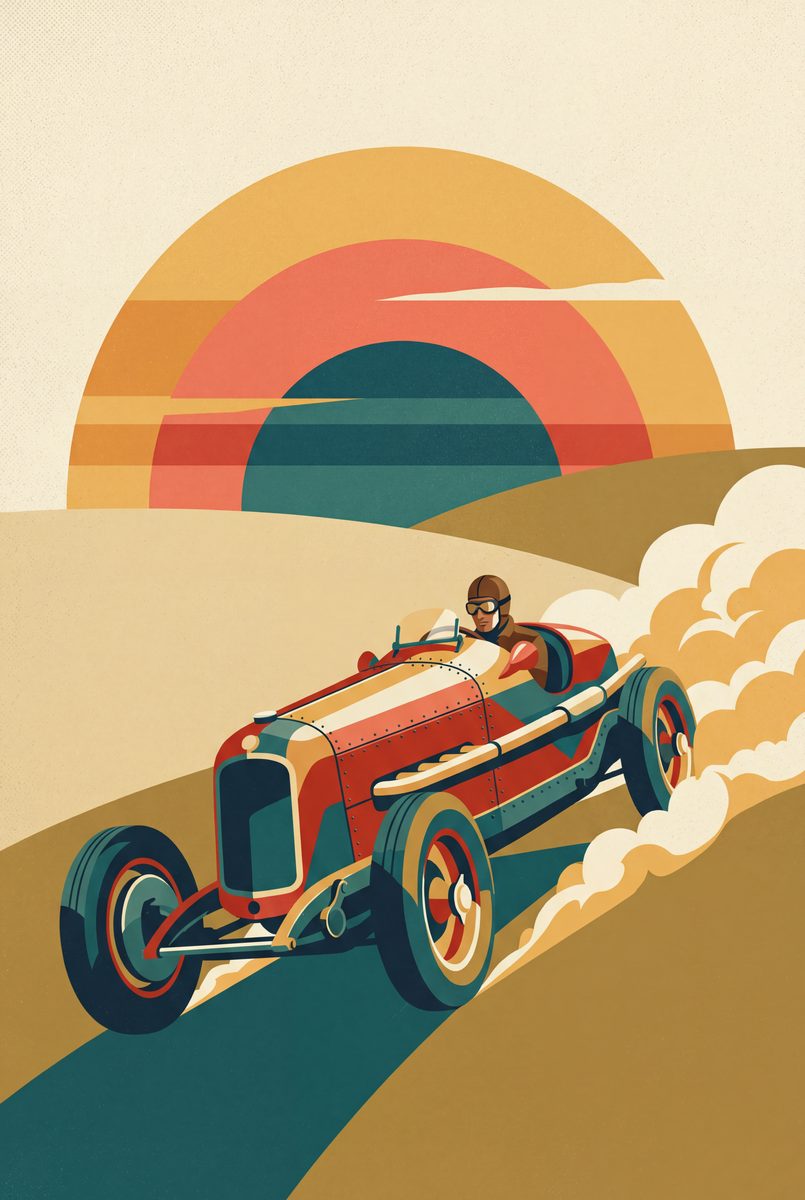
Apex at Dawn is an open-wheel racer from the 1930s cresting a hill at sunrise, which is single-seater racing at its origin: no wings, no aerodynamics as a discipline, and a driver sitting on top of the car rather than inside it.

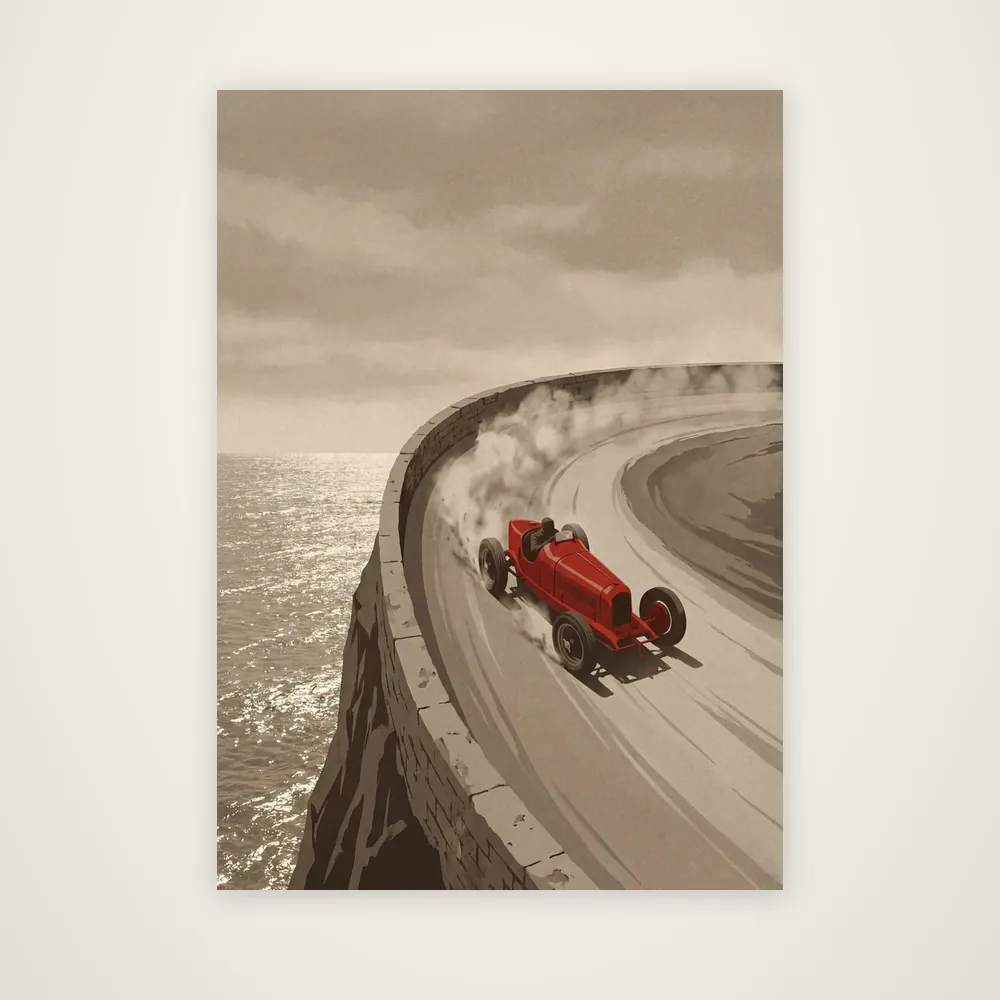
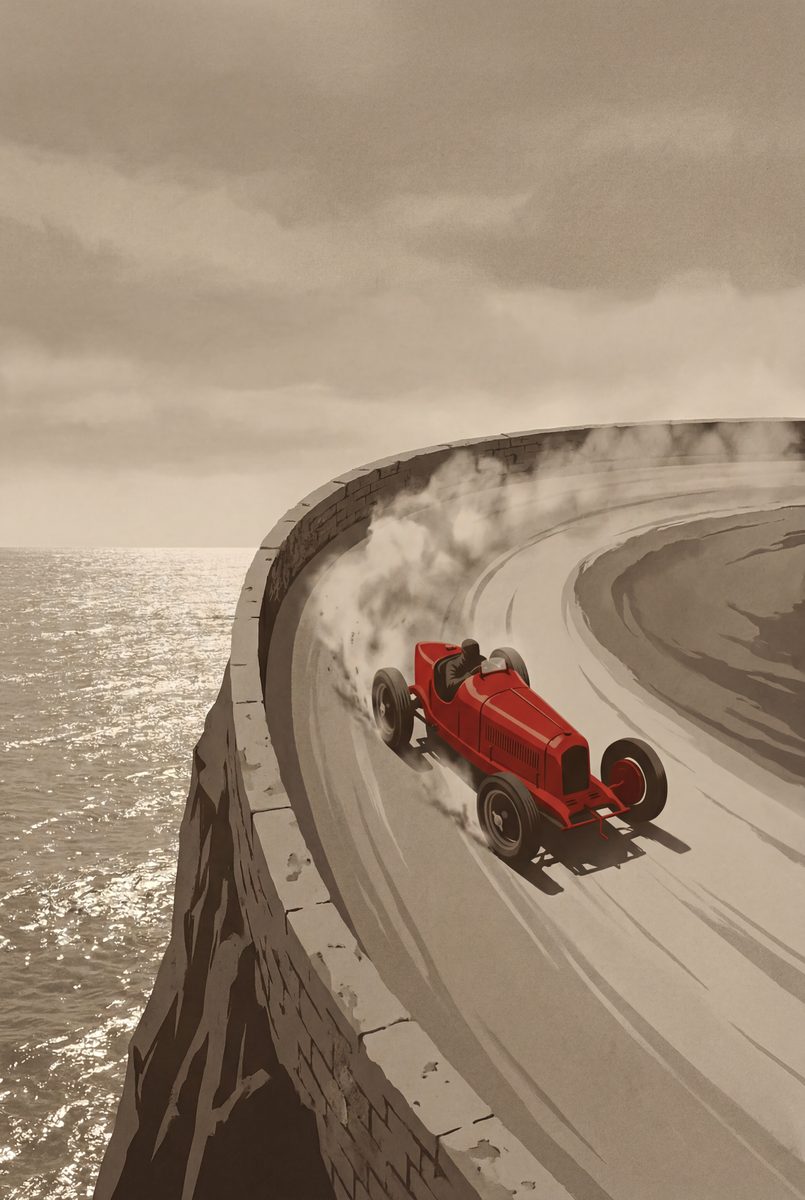
The Hairpin is a cliffside bend, tail out, dust in the air. Racing of that era ran on closed public roads and this is what that looked like, which is why the corner rather than the car is the subject.

Endurance is a 1960s prototype at dusk with its headlamps on, settling in for the night hours. Different discipline, same argument: the interesting part of a race is rarely the finish.

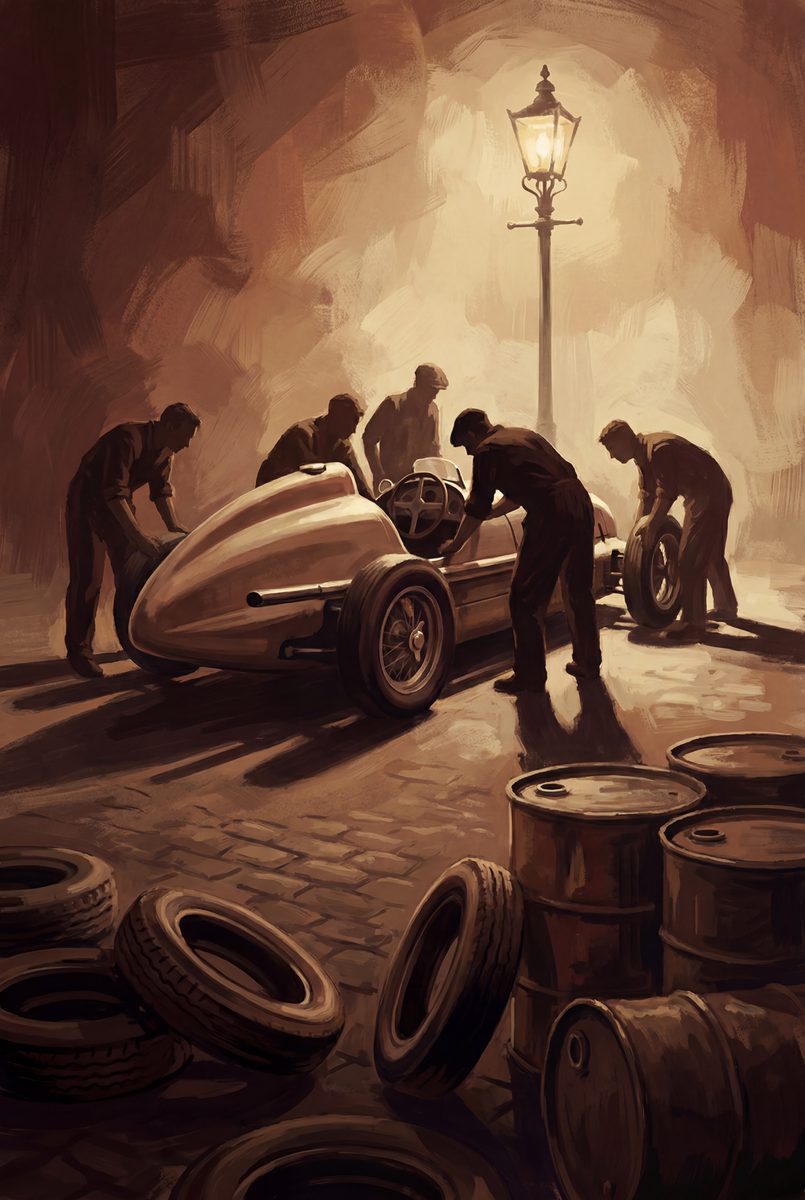
Pit Lane, 1955 is the crew, not the car. Mechanics under lamplight around a stripped chassis, oil cans and stacked tyres. Every championship is mostly this, and almost no wall art is.

Aerodynamica is the wind tunnel made visible, cyan streamlines flowing over a wedge silhouette. It is the closest thing here to the modern sport, where aerodynamic development absorbs an enormous share of the engineering effort.

If you want the specific season

Then buy it licensed, and enjoy it. If what you actually love is the sport rather than one team's year, these five hold up longer on a wall precisely because they are not tied to a season that will date. The racing page takes the same pictures and argues them as racing art rather than as a licensing question, and the art is the stage above both.

You can also make the specific car yours the honest way: photograph it and use the Paint Shop, which repaints your own photograph rather than anybody else's intellectual property.

Related pages: art deco car art · vintage car posters · all car art

Pick the picture.

Open an artwork to compare its available formats, sizes and prices.

Questions, answered.

Do you sell prints of real grand prix cars?
No. Every machine here is an original design. There are no manufacturer badges, team liveries, race numbers, sponsor marks or driver likenesses on any print we sell, because we hold no licence for them.
Why not just sell the licensed version?
A licence fee sits inside the price of licensed merchandise, and we would rather sell original work at the price of a print. It also means these pictures do not date with a season.
Can you draw a specific car for me?
Not from a description. The Paint Shop works from a photograph you own, so if you have taken a picture of a car yourself, that can be repainted. We cannot reproduce someone else's protected design to order.
Which of the five is the most modern?
Aerodynamica. It is the wind tunnel rather than the circuit, and aerodynamics is where a great deal of modern single-seater development happens.

Next

JDM and night drives →

Nineties Japanese car culture produced a very specific kind of picture, and almost none of it is about racing. It is about being somewhere empty at one in the morning with the engine off, and about what sodium light does to wet tarmac. Five pieces built out of that.

Try it

Upload a photograph of your car, pick one of nine styles, and review the result before ordering. Three free previews a day, verified email and no card.

Try it on your own car

Or the photograph itself, printed as it is