Six pages live here now, and they split evenly. Two are about the object on the wall: how big it should be and what surrounds it. Two are the DVLA’s own counts: how many cars from each year still hold a licence, and which cars reach the historic tax class next. Two are about giving one to a person who is difficult to buy for. The four stages hold the rest of the reading.
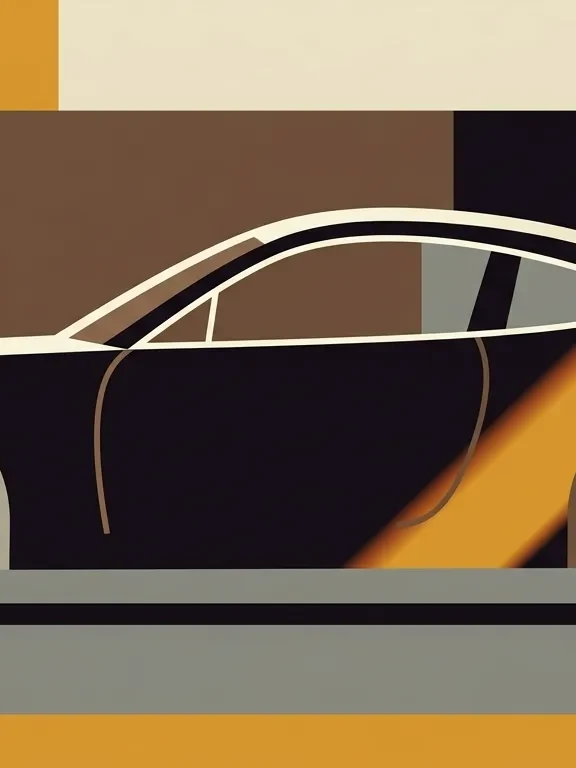
Their car, repainted from one photograph in whichever of the nine styles suits the room. Free preview first, accepted on screen before anything is charged.
From £19.99 · Poster
The object
- Car poster sizes, and how to pick one: the five sizes from A4 to 70x100, and why the right one depends on the wall and the viewing distance, not the picture.
- How to frame a car print: a frame is a decision about how much attention the picture gets, and the artwork's own ground colour makes some of it easy.
The data
Two pages, and they argue nothing. They reproduce government statistical series: the counts are the DVLA’s, and so are the caveats attached to them.
- How many cars from each year are still licensed: the DVLA’s own counts by year of first registration, every year from 1950 to 1999 in a table, with the three caveats the DVLA attaches to the figures and the 1972-73 bump left as an observation, not a cause.
- Cars turning historic: the cars that reach the historic vehicle tax class on the next 1 April, by make and model, from the DVLA's year-of-manufacture file.
The gift
- The petrolhead gift guide: why a serious enthusiast is hard to buy for, and what to do when everything a shop sells is a tool or a tee-shirt.
If you'd rather read the site in order, start at the car and follow the stages through: the art, the wall, the gift.
Written by Craig Fearn, Petrol & Ink. Last updated .