

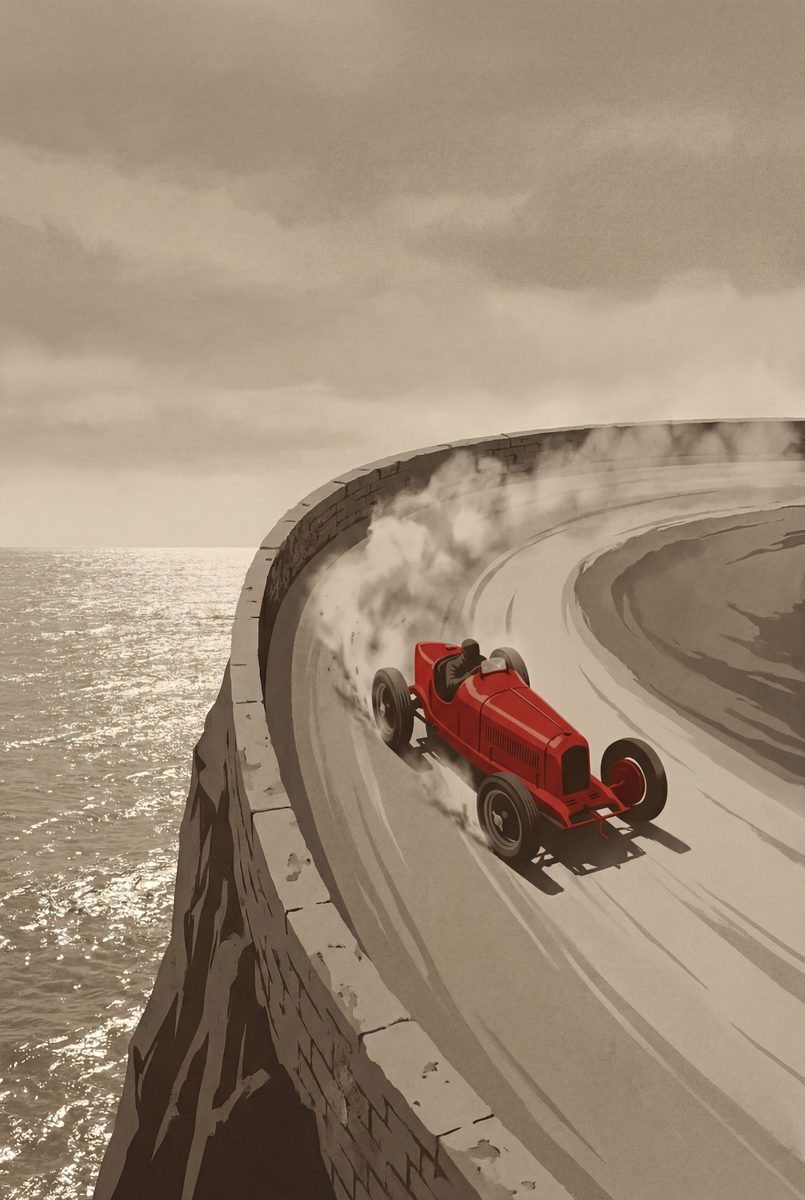

The short version. Buy canvas for a wall that catches light, and for a painterly picture. If the artwork is fine linework on a flat ground, canvas will cost you the thing that makes it good.
The glazing argument, which is the real one
A framed print has plexiglass in front of it, and anything in front of a picture reflects. On a wall opposite a window, or facing a television, that reflection competes with the artwork all day, and it is worst on the dark pictures because there is nothing bright in them to overpower it. A canvas has no glazing at all. There's nothing between you and the surface, so the picture stays visible from every angle and in every light.
That is the whole case, and it is enough on its own. Everything else about canvas is preference.
The weave argument, which cuts both ways
Canvas has a texture, and the ink sits into it. Under a painterly picture that reads as brushwork and makes the artwork feel like an object, not a reproduction. Under fine linework it eats the line: hairline linework crossing a weave loses its edge, and the precision that was the entire point goes soft. That isn't a trade worth making.
So the blueprint and the single-line piece should stay on paper. The four above are the ones that gain.
Car wall art on canvas: the four
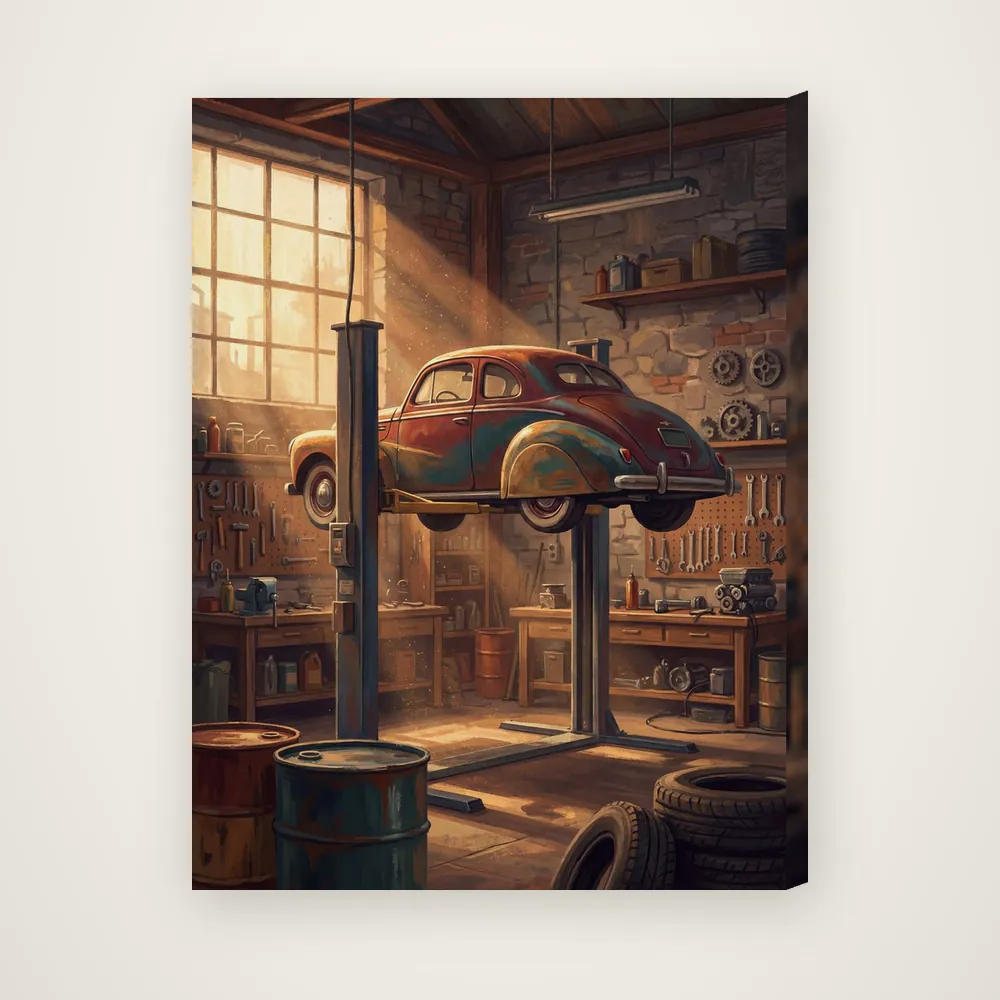
The Workshop is the strongest on canvas: a classic up on the lift, tools on the wall, dust in golden light. It is built out of warm light falling across texture, and a weave under that is doing the same job the picture is.
Pit Lane, 1955 is the other lamplit one, mechanics swarming a stripped racer among oil cans and stacked tyres, and The Hairpin puts a vintage racer mid-drift on a cliffside bend above the sea. Both are painterly scenes, not linework, so the weave adds to them instead of blurring them.
Deco Metropolis is here for the glazing reason more than the weave one. It is a night scene, an elegant coupe before stepped skyscrapers and a stylised moon, and dark pictures suffer most behind plexiglass, so canvas solves that outright.
What you are buying
The canvas is stretched over a two-centimetre FSC-certified wooden frame and arrives ready to hang, at 30 by 40, 40 by 50, 50 by 70 and 60 by 80 centimetres. The canvas wraps around the edges, and the sides carry a soft, blurred band taken from your picture's colours, so it reads as an object from the side as well as the front.
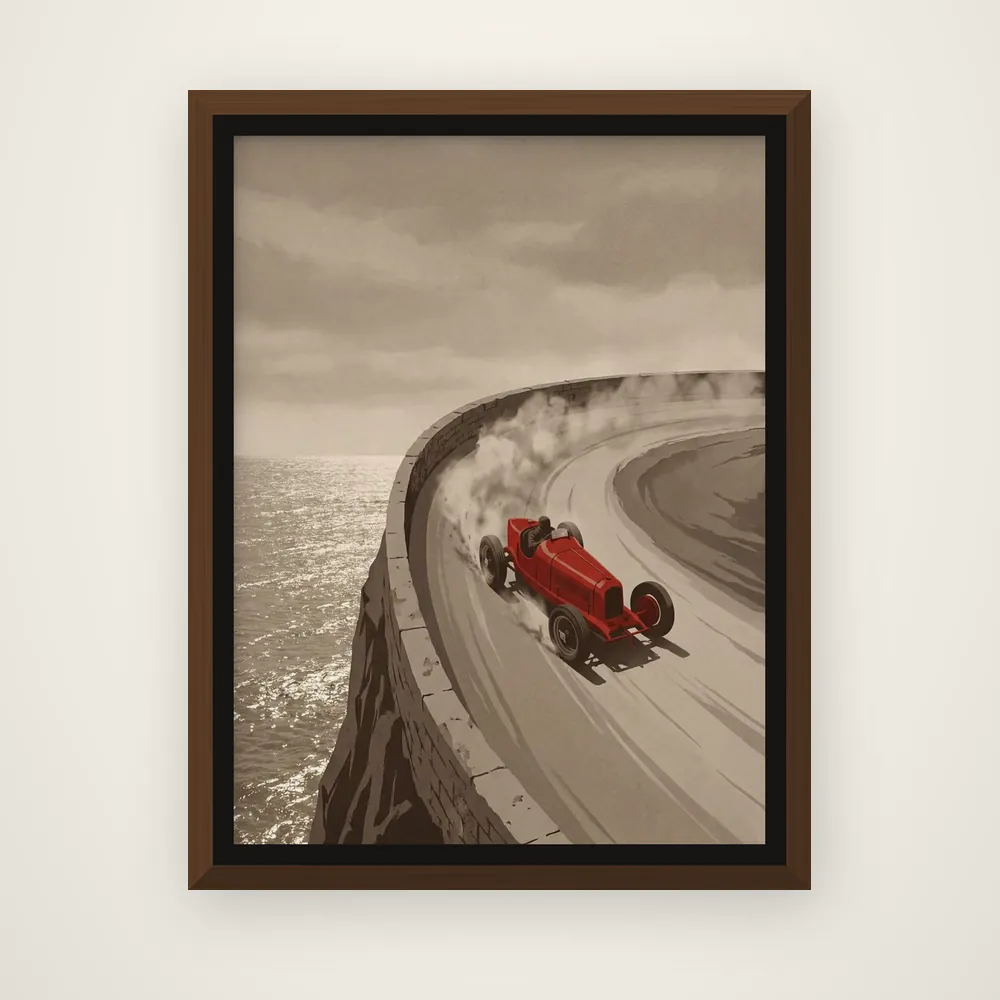
If you want the canvas finished with a surround, framed canvas puts it inside a floating wooden frame in black, dark wood or natural wood at three of those sizes. The formats page sets out the whole range, and the size guide deals with which dimension a wall wants. Note that canvas sizes are metric and do not line up with the A-sizes, so a canvas will not hang neatly beside an A2 poster.