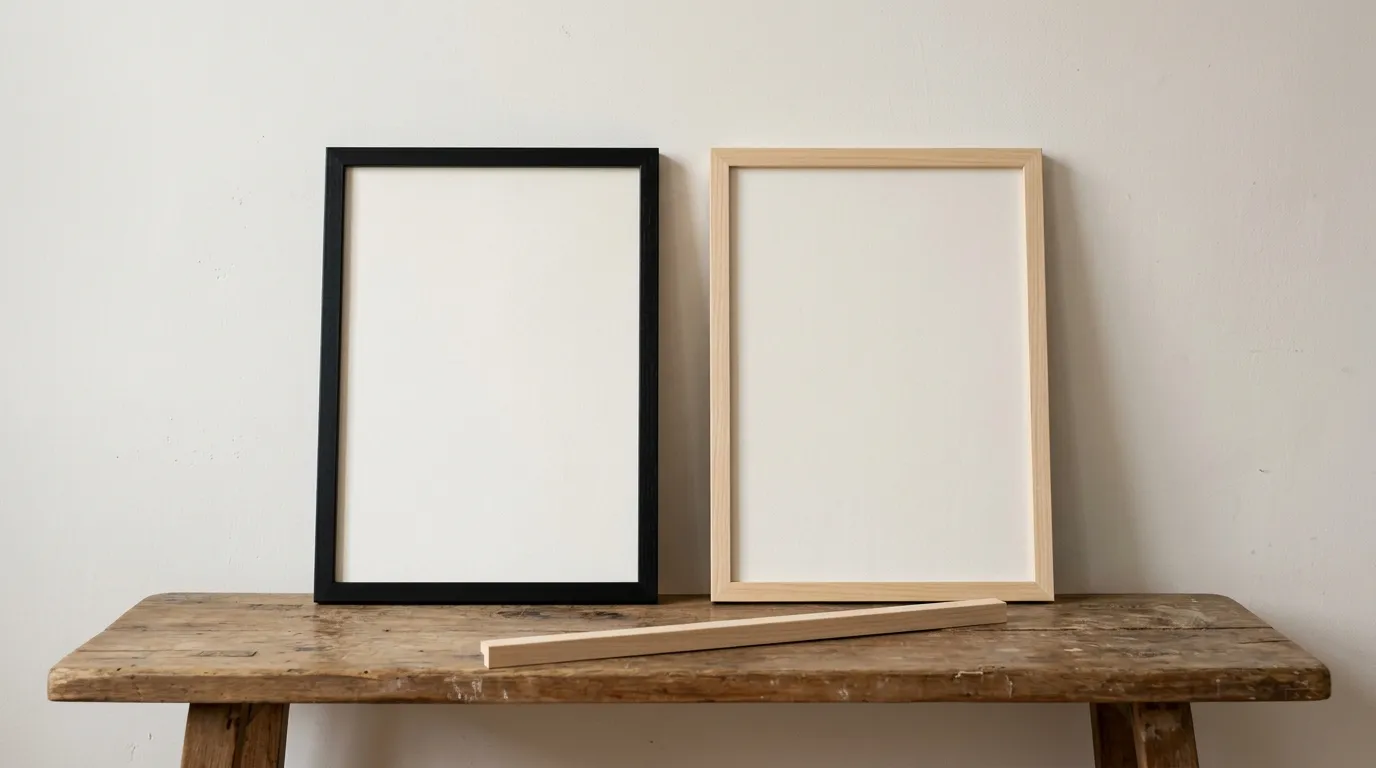
The short version. Dark or technical picture, black frame. Warm or cream picture, natural wood. Glare-prone wall or a working garage, no frame at all, use canvas. Those two frame colours are the only two we sell, which is a decision, not a limitation.
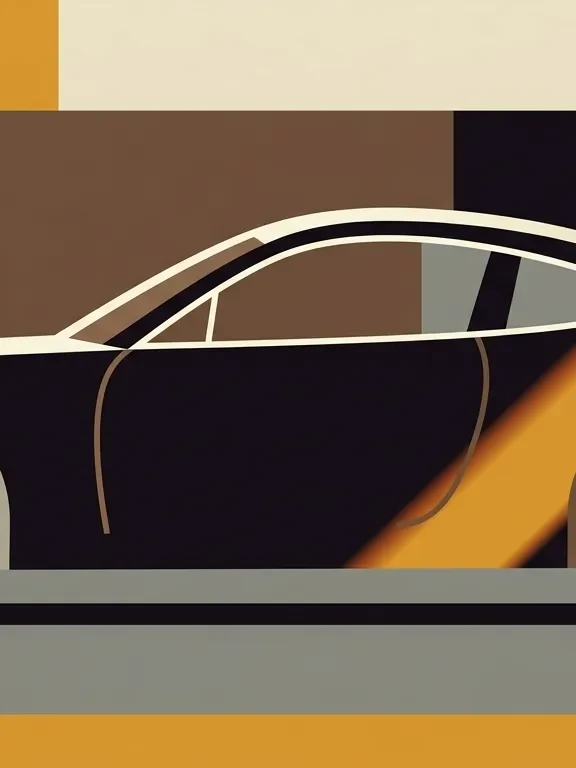
Once the size and frame are settled, the picture is the easy part: your own car, from one photograph, in the style the room needs.
From £19.99 · Poster
Black, for the dark and the technical
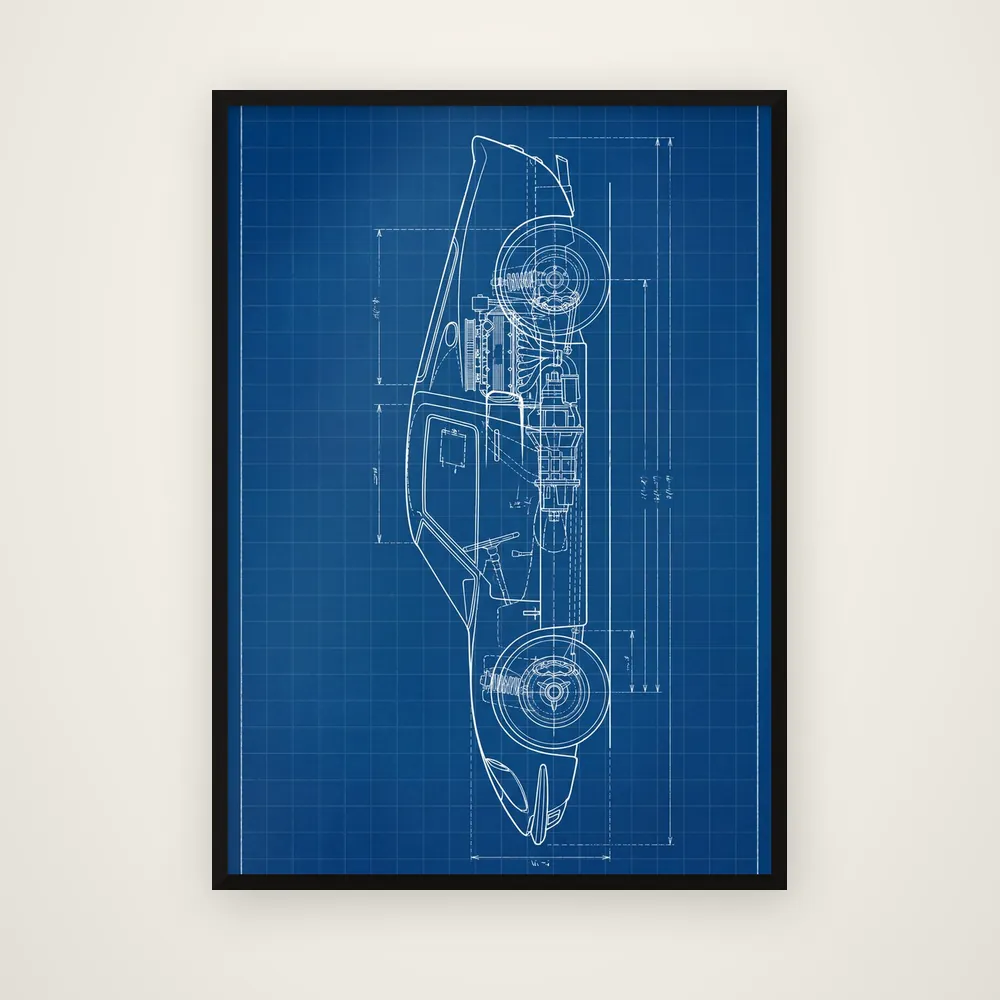
A black frame reads as a continuation of the picture, not a border around it, which is what you want when the artwork already has a lot of black in it. The blueprint suits a black edge, since white linework on cyanotype blue wants something to stop against. Deco Metropolis, a night scene, behaves the same way.
Black also wins in a room full of hardware: a study or an office with a monitor, a desk lamp and black shelving already has a visual language, and a wood frame there looks like it wandered in from another house.
Natural wood, for the warm
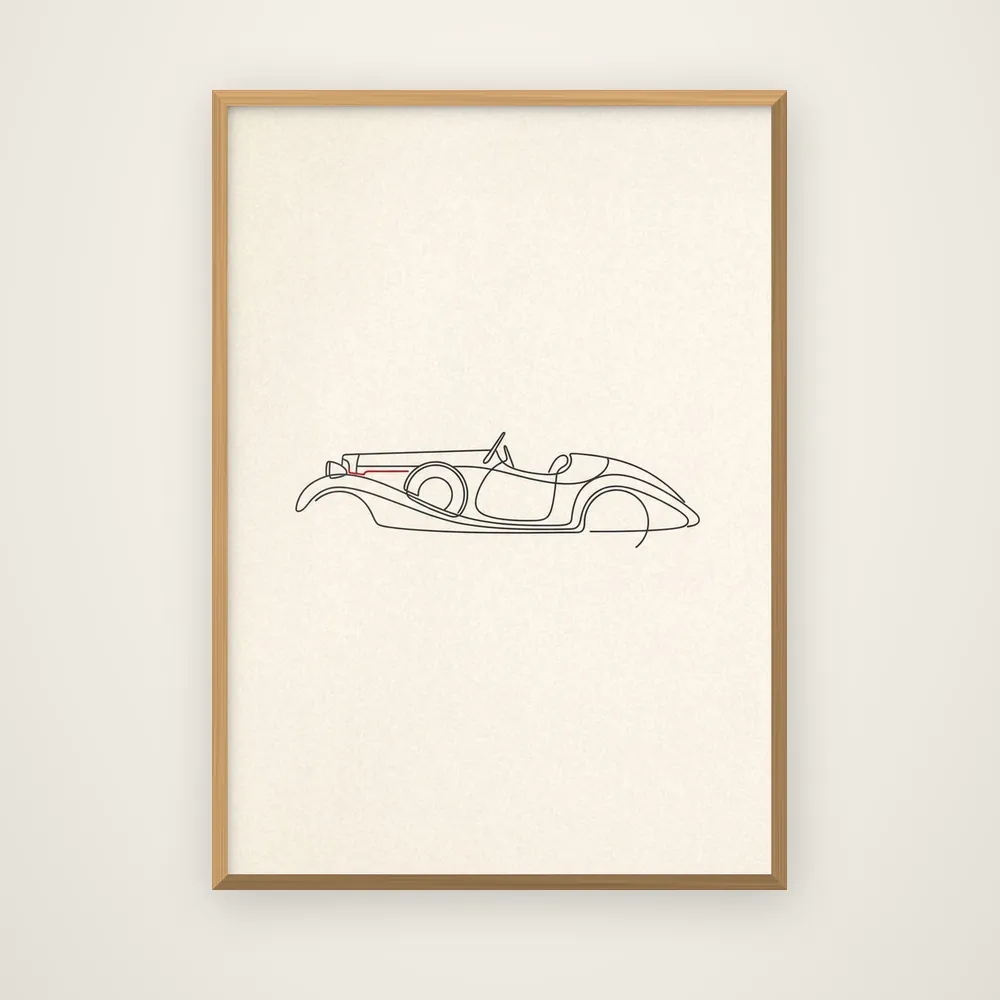
Light wood flatters a warm ground. The cream and ochre of the vintage posters and the cream paper of the single-line roadster both sit inside natural wood as if they were made for it, and inside black they look like they are being held at arm's length. Warm metallics do the same thing, which is why the deco pieces take wood better than the collection average.
The other argument for wood is the room, not the picture. A living room or a bedroom where somebody else also lives is usually the wrong place for a hard black rectangle.
What our frames are
A wood moulding roughly twelve millimetres wide and twenty-two deep, with a plexiglass front, not glass, at A3 and A2, in black or natural wood, arriving with the hanging hardware fitted.
Plexiglass isn't a compromise here. It weighs a fraction of glass, which matters on a large frame hanging on a plasterboard wall, and it doesn't turn into a hazard if it comes off the hook. What it does do is scratch more easily, so clean it with a soft dry cloth and nothing abrasive.
There is no mount. The frame opening and the paper are the same size, so the print goes edge to edge. A mount would push the picture back and add breathing space, which is a genuine look and one you can have done locally. If you are commissioning bespoke framing for something large, the Fine Art Trade Guild, the UK trade association for art and framing, publishes its own Guild Standards and lists qualified framers.
When not to frame at all
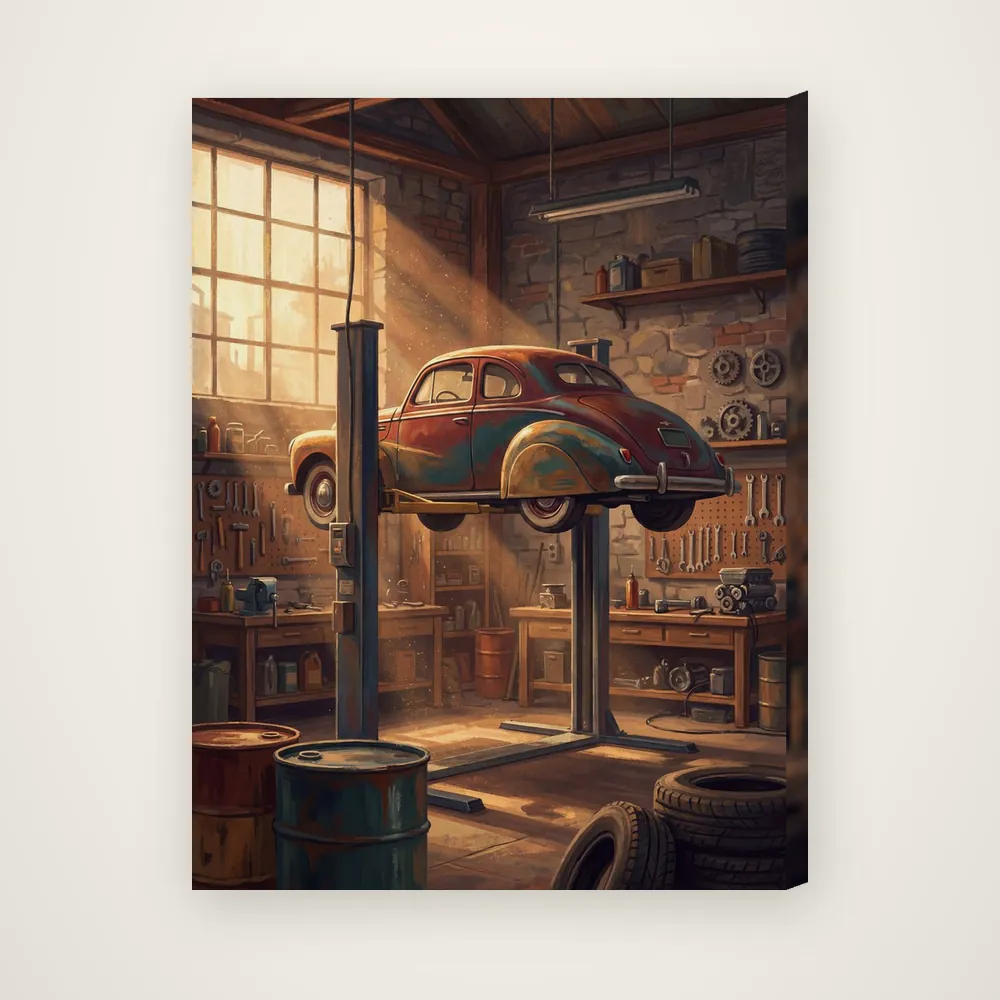
Two clear cases. A working garage or workshop, where glazing of any kind near tools is a bad idea and the humidity is not kind to paper: hang an unframed poster you can replace, or a canvas.
And a glare-prone wall, meaning one opposite a window or facing a television. Glazing reflects, and a dark picture reflects most because there is nothing bright in the artwork to compete. Canvas has no glazing at all, which is the whole argument for it.
Next
If you haven't settled the size yet, do that first, because a frame adds to the finished dimensions on the wall. The size guide covers it, and the formats page covers metal, wood and everything else that is not paper.
Written by Craig Fearn, Petrol & Ink. Last updated .