The short version. The photograph of a race belongs to whoever took it, and the marks and liveries in it belong to the teams, so racing wall art built on either one carries a licence fee inside the price. These three are car artwork instead, printed to order, so they cost what a print costs and they show a moment, not a marque.
What each one is of
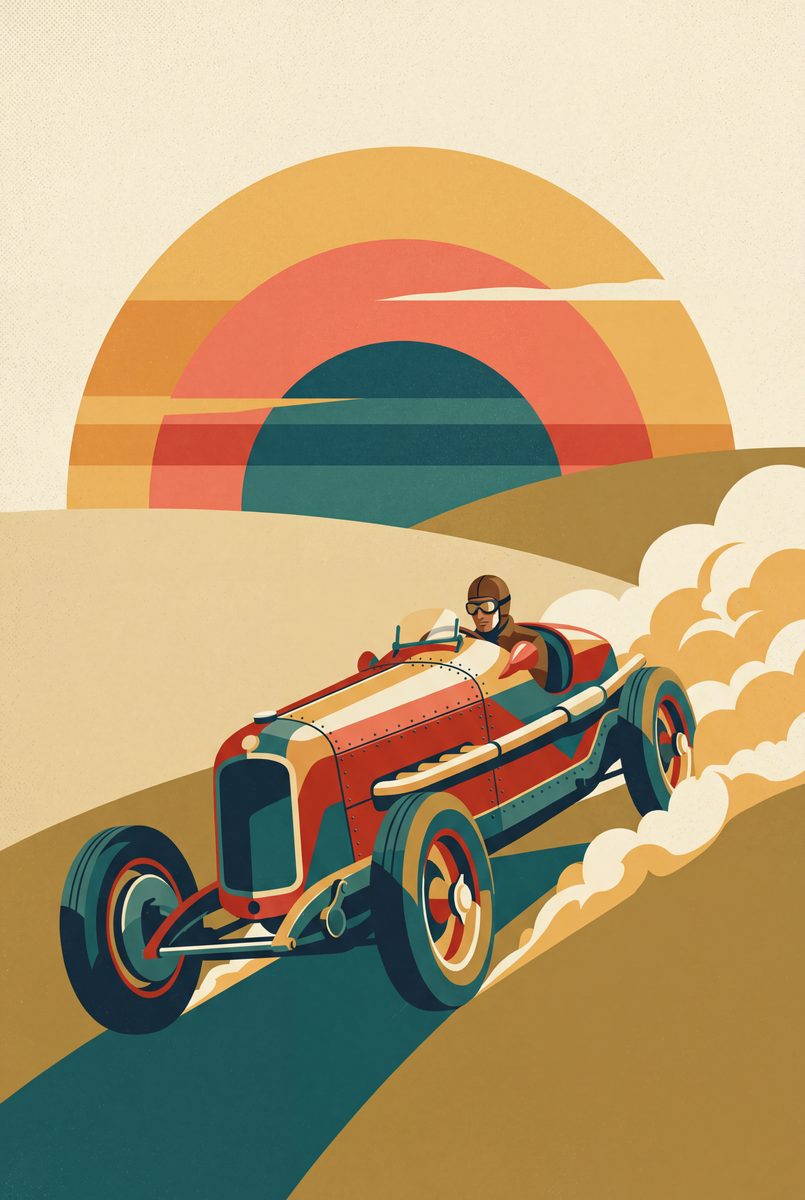
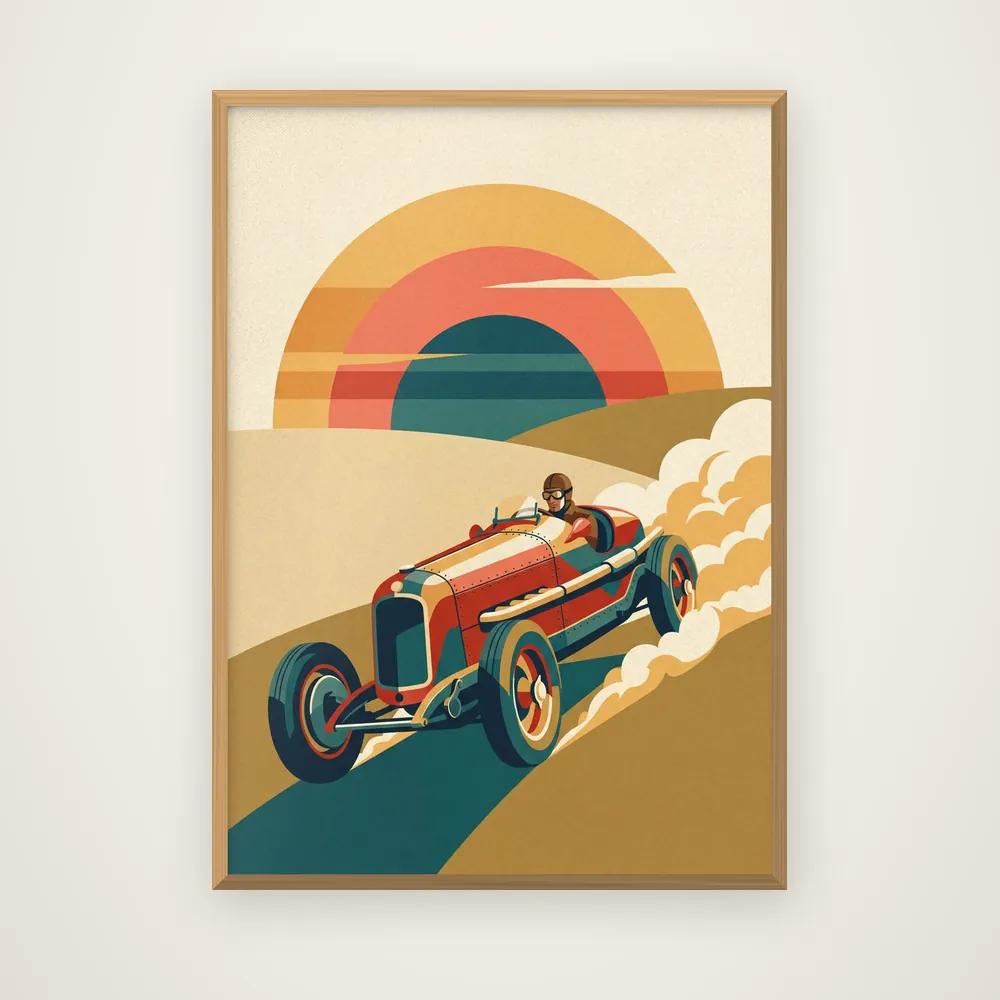
Apex at Dawn is a 1930s open-wheel racer cresting a hill into the sunrise with dust trailing. It is the earliest kind of racing there is, before aerodynamics were a discipline, when the car was a chassis with an engine in the front and a person sitting on top of it. Ochre, cream and a signal red, and it hangs warm.
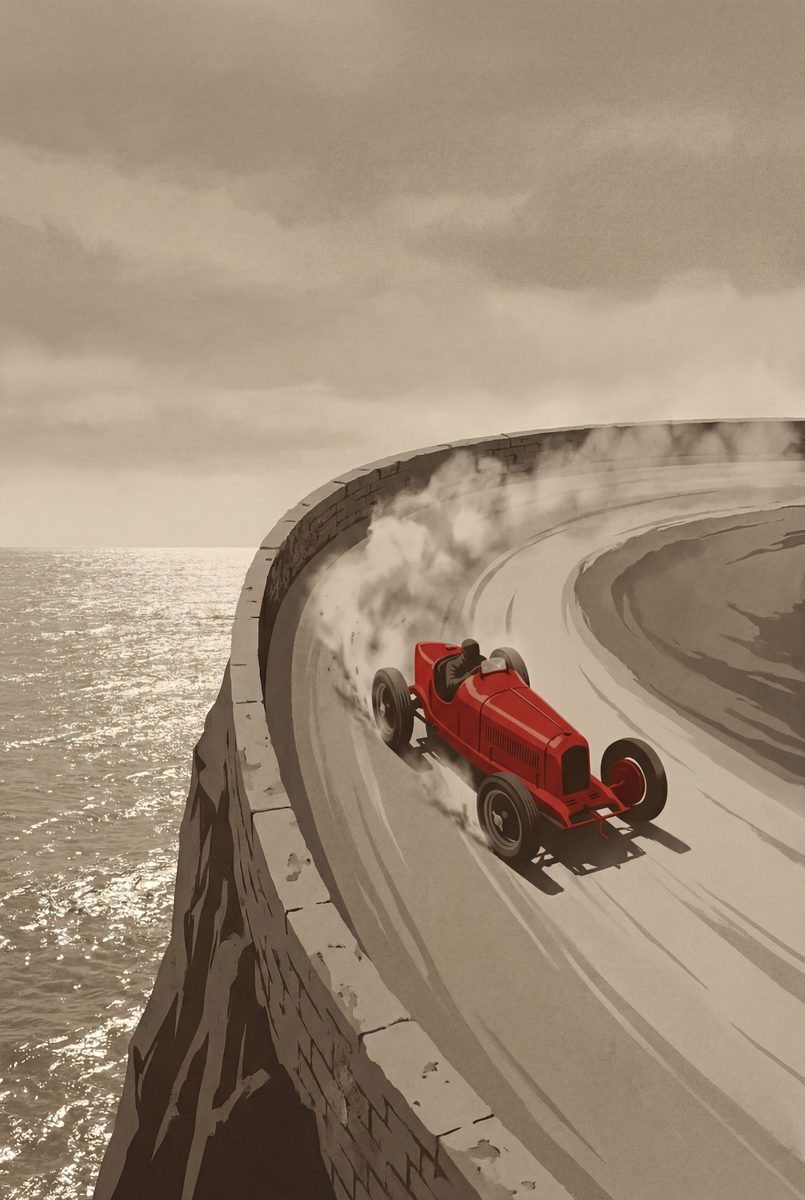
The Hairpin is a vintage racer caught mid-drift: tail wide, dust flying, a cliffside bend above the sea. It is the picture for anyone whose interest in racing is an interest in car control, because the whole composition is about a driver holding something that has already let go.
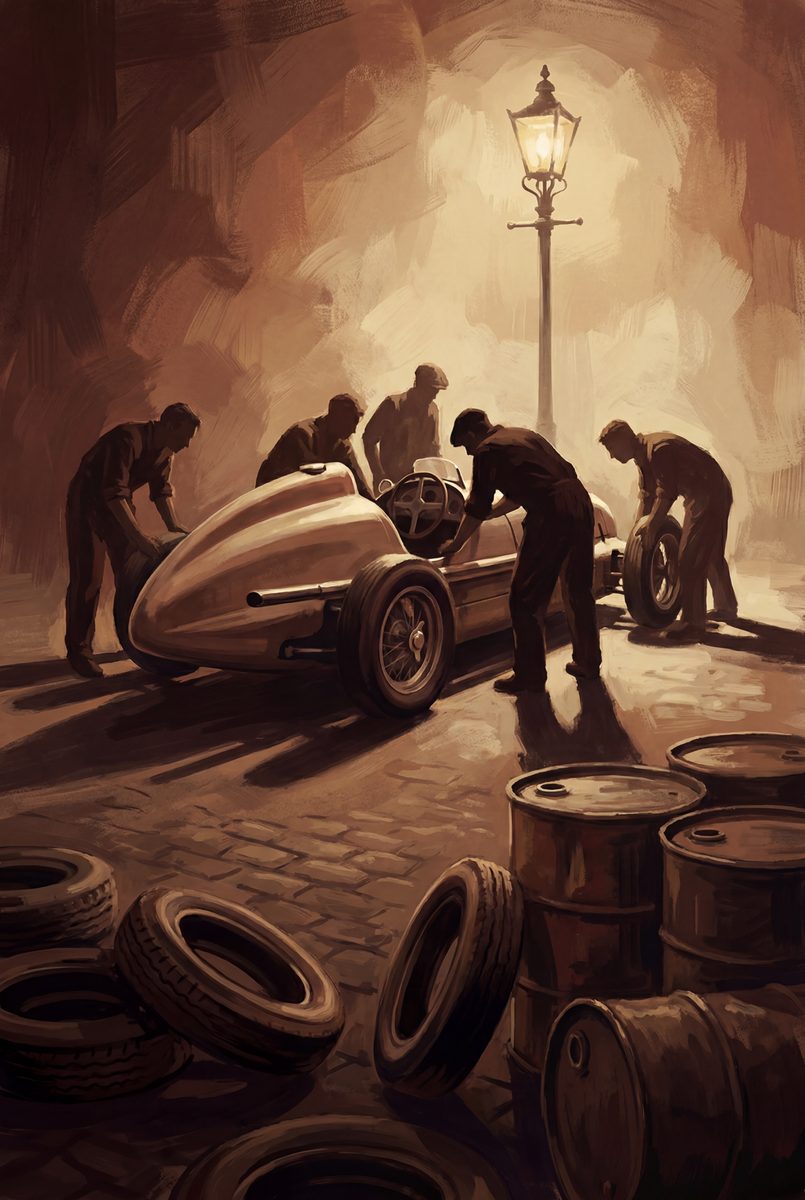
Pit Lane, 1955 isn't about a car at all. Mechanics swarming a stripped racer under warm lamplight, oil cans, stacked tyres, everyone doing something. It is the argument that racing is a trade before it is a spectacle, and it is the one to give somebody who has ever rebuilt anything.
Why there is no licence fee in the price
We don't hold a licence for any team, maker, livery, race number or driver likeness, and nothing here is sold as licensed merchandise. These pictures are about the parts of the sport that no one owns: the light, the corner and the crew. That turns out to be enough.
If the specific championship is the point, not the racing, the grand prix page explains what can and can't fairly be sold. If the era matters more than the sport, the vintage posters put these beside a workshop scene and a single-line roadster.
Living with them
The three sit well as a run, with the pit lane in the middle between the two racing scenes. The wall is the stage that deals with size and frame properly.