Operator's manual — original car art
Petrol & Ink

Art deco was the last time cars and buildings agreed.

For about fifteen years in the 1930s, the people drawing cars and the people drawing skyscrapers were chasing the same idea: speed as a shape. Streamlining, stepped geometry, sunbursts, chrome lines going nowhere in particular. Four pictures from that agreement.

Explore Deco Grand Tourer: formats & prices ↗
Deco Grand Tourer
From this collectionDeco Grand Tourer

The short version. Deco is the most decorative this collection gets, and it stays the right side of kitsch because the decoration was structural: the fins, the teardrops and the speed lines were what designers genuinely believed fast should look like. These four are painted in that palette, gold and black and emerald and cream, and they are the ones that make a room look considered rather than enthusiastic.

The four

Deco Grand Tourer is the full statement: a streamlined 1930s grand tourer in gold, black and emerald, chrome speed lines running the length of it, a bold geometric sunburst behind. It is the piece to hang if you only hang one, and it is deliberately the loudest thing in the collection.

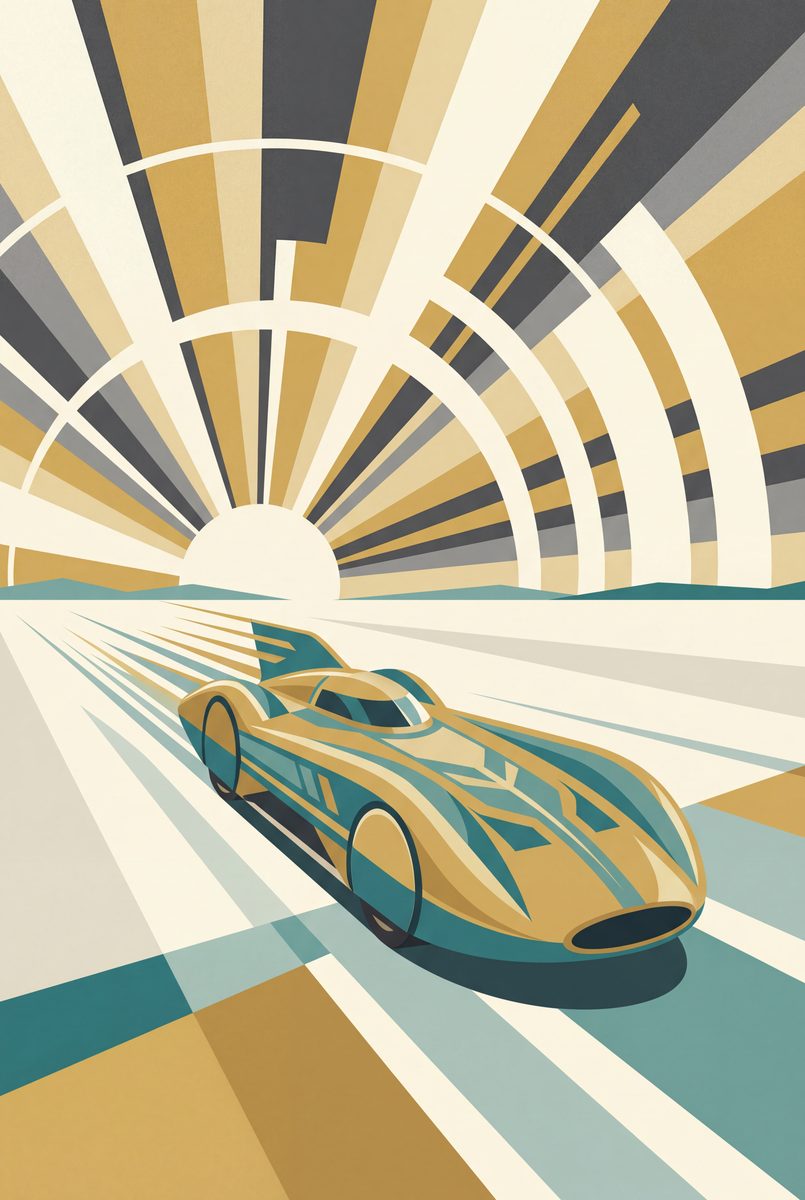
Speed Record is a land-speed racer arrowing across the salt flats under radiating geometric sun rays. Record attempts were the decade's obsession and they produced the strangest-looking cars anybody has built, because nothing about them had to be practical. Machine-age glamour, held still.

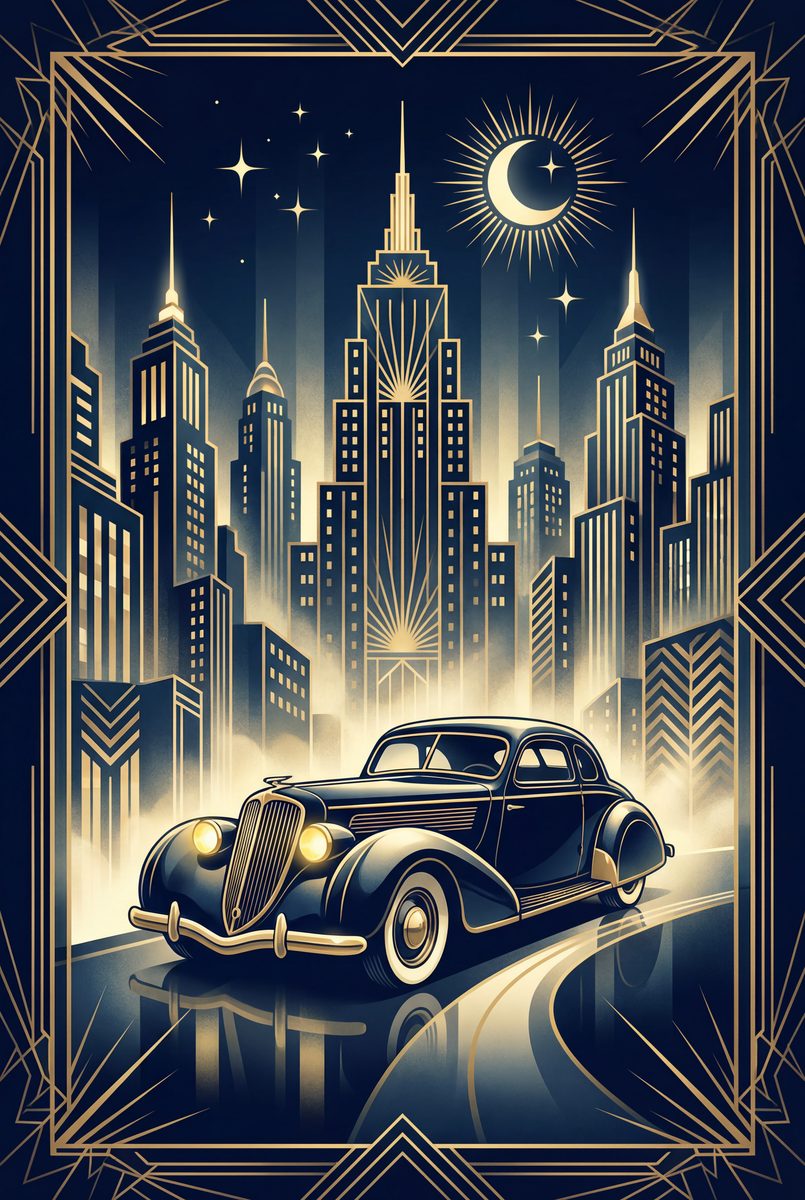
Deco Metropolis takes the car into the architecture: an elegant coupe in front of stepped skyscrapers and a stylised moon, in midnight blue, gold and cream. This is the one that proves the point about cars and buildings, because you cannot easily say which half of the picture is doing the work.

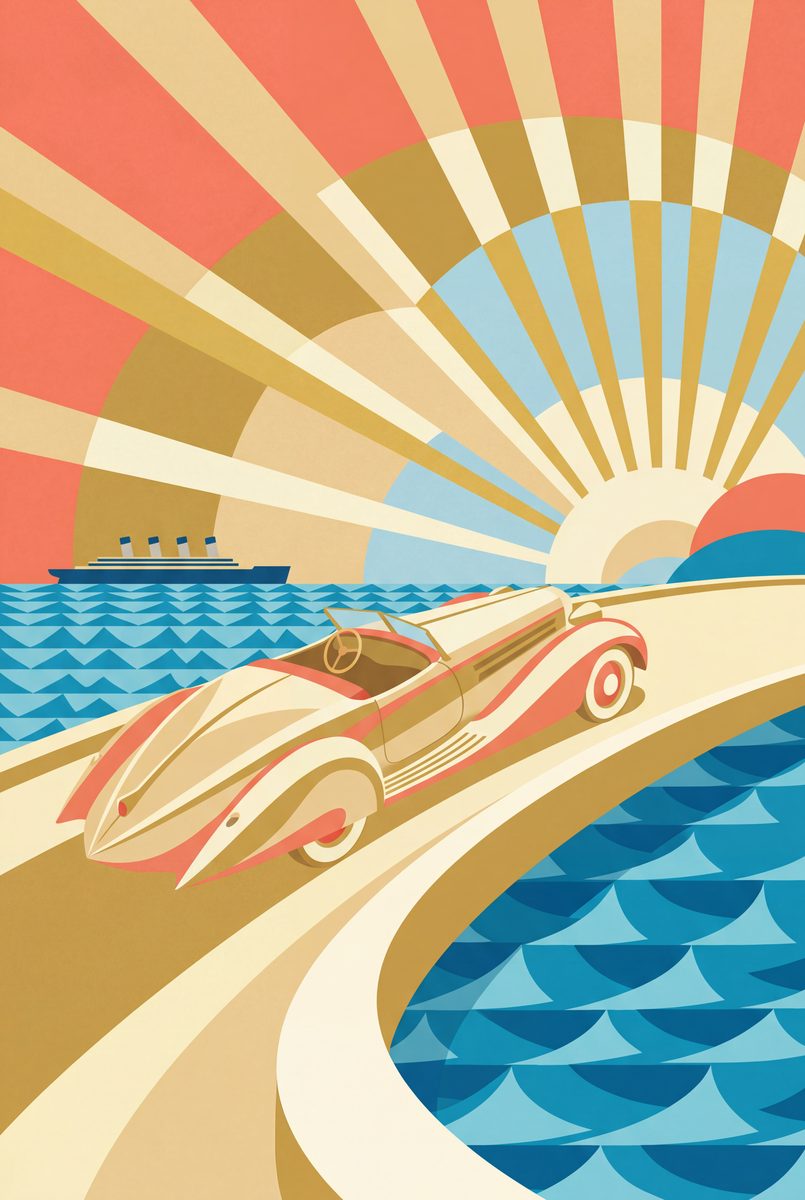
Deco Riviera is the holiday. An open roadster on the corniche above a geometric sea with a liner on the horizon, in the travel-poster idiom the decade invented. It is the lightest of the four and the easiest to live with in a room people actually sit in.

Hanging deco

Gold and emerald on a dark ground is a strong decision, so these want space rather than company. One of them centred on a wall does more than two of them side by side, and they are the pieces most likely to be bought at a size larger than the buyer first intended. They also take a natural wood frame better than the collection average, because the warm metallics in the palette pick the wood up.

If the geometry appeals more than the glamour, the single-line work is the austere version of the same instinct. If the period is what you are after rather than the styling movement, the vintage posters cover the same years in a different register. The wall handles size and framing.

Pick the picture.

Open an artwork to compare its available formats, sizes and prices.

Questions, answered.

Are these real 1930s cars?
No. All four are original designs drawn in the art deco idiom, with no manufacturer badges, model names or liveries.
Which is the best one to start with?
Deco Grand Tourer if you want the full statement, Deco Riviera if the room is somewhere relaxed. The Grand Tourer is deliberately the loudest picture in the collection.
Do they work as a set?
Two of them do. All four together is a lot of gold in one place, and each one is composed to hold a wall on its own.
What frame suits art deco prints?
Natural wood, more often than black. The warm metallics in the palette are picked up by wood, where black tends to close the picture down.

Next

Vintage car posters →

A vintage car poster is usually one of two things: somebody's archive design photographed again and sold as a reproduction, or a licensed period photograph with the licence fee inside the price. These eight are a third thing. They were painted now, in the visual language of then.

Try it

Upload a photograph of your car, pick one of nine styles, and review the result before ordering. Three free previews a day, verified email and no card.

Try it on your own car

Or the photograph itself, printed as it is