What changed
GOV.UK's guidance puts it simply. Standard 95 octane petrol became E10 in Great Britain in September 2021, and in Northern Ireland in November 2022. E10 contains up to 10% renewable ethanol. The petrol it replaced, E5, contains up to 5%. Diesel hasn't changed.
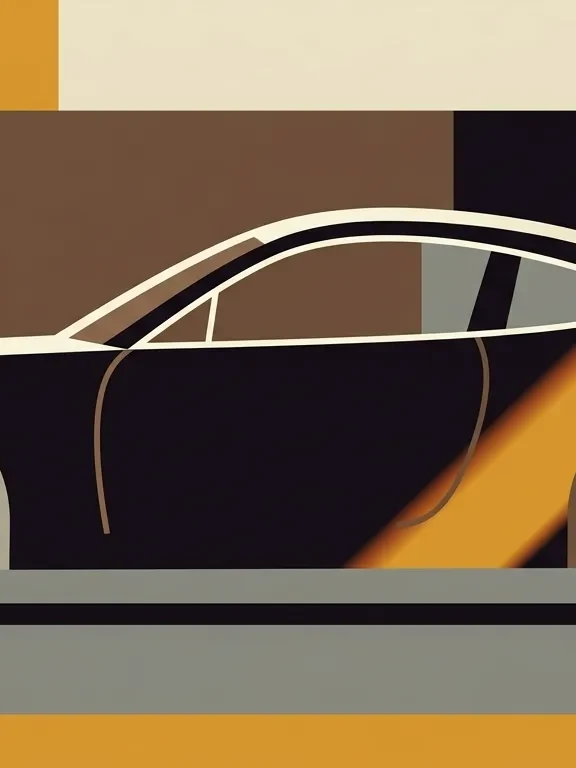
Their car, repainted from one photograph in whichever of the nine styles suits the room. Free preview first, accepted on screen before anything is charged.
From £19.99 · Poster
| Pump label | Grade | Ethanol |
|---|---|---|
| E10 | Standard, 95 octane | Up to 10% |
| E5 | "Super", 97+ octane | Up to 5% |
Why classic owners ask
GOV.UK says all cars built since 2011 can use E10, and most from the late 1990s on are approved by their makers. It names "classic, cherished and older vehicles" first among those that may not be. It also says many classic makes aren't in its checker, and that where a maker no longer trades it can't give an answer.
What GOV.UK advises
If your car isn't in the checker, keep using E5, the "super" grade. If you're in doubt, the same. If you fill up with E10 by mistake once, GOV.UK says just fill up with E5 next time: you shouldn't need to drain the tank. It warns that using E10 for a long time in a car that isn't suited to it may cause harm. You can mix the two grades in a car that can take E10.
Why we don't give you the answer ourselves
The checker covers makes, models, engine sizes and years. Copying it would mean our page going out of date the day it changes, so we send you to it instead. For a car the checker doesn't cover, GOV.UK suggests owners' clubs and garages who know your kind of car.
Sources
GOV.UK's E10 petrol explained and the E10 vehicle checker, both read on 30 October 2026. Working out a trip in an older car? Try the fuel cost calculator or the historic car checker.
Written by Craig Fearn, Petrol & Ink. Last updated .