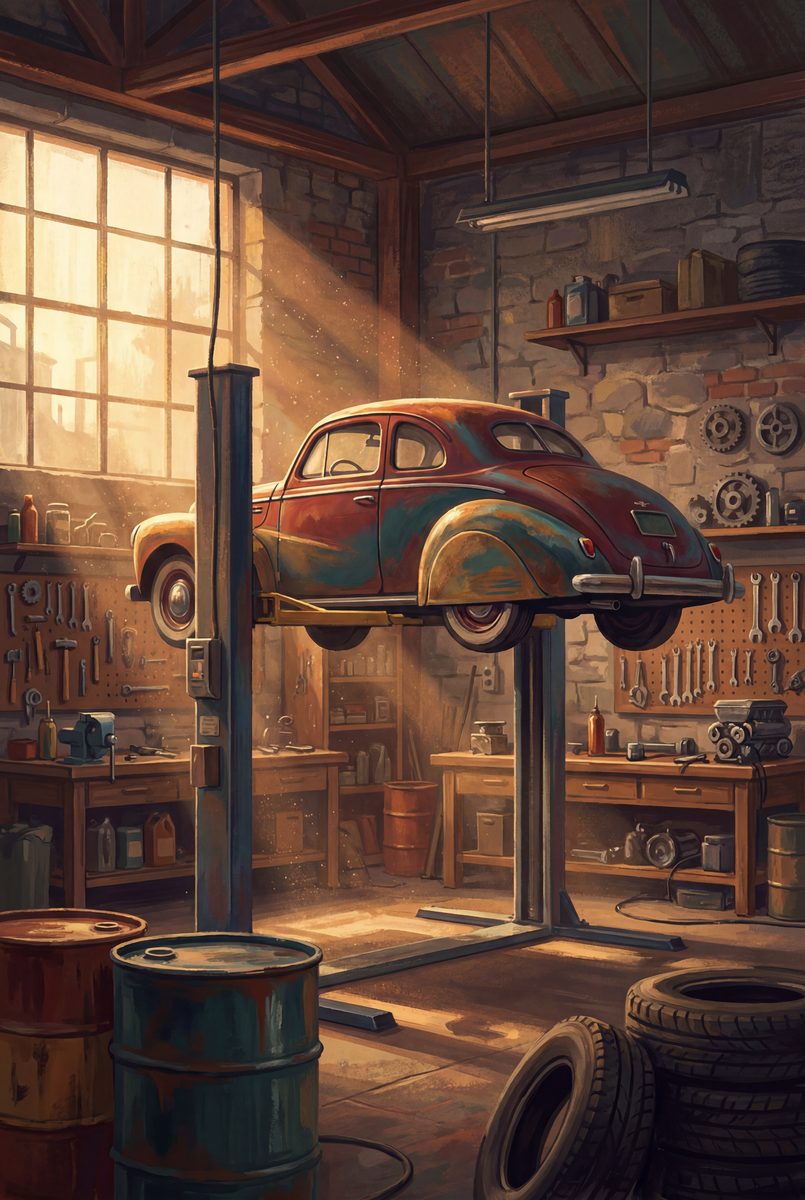
The short version. Do not put glass in a room with tools in it. Choose warm pictures, because overhead fluorescent light drains everything cool, and choose subjects about work rather than about speed, because that is what actually happens in there.
The five
The Workshop is a classic up on the lift, tools on the wall, dust hanging in golden light. It's the obvious one and it earns the place: it's a picture of the room it's hanging in, on a better day.
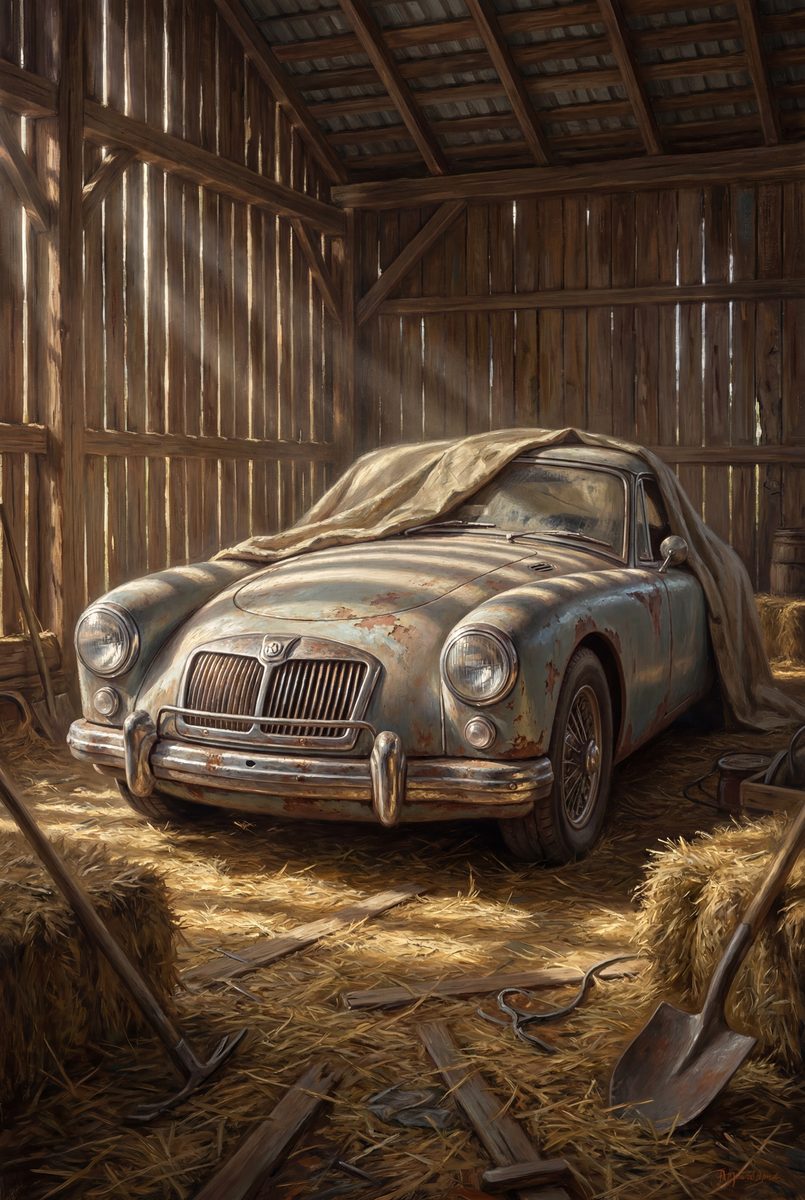
The Barn Find is the one that lands with people who wouldn't otherwise buy art, because everybody who has owned a project already has some version of it in their head. Slatted light and a half-pulled tarp.
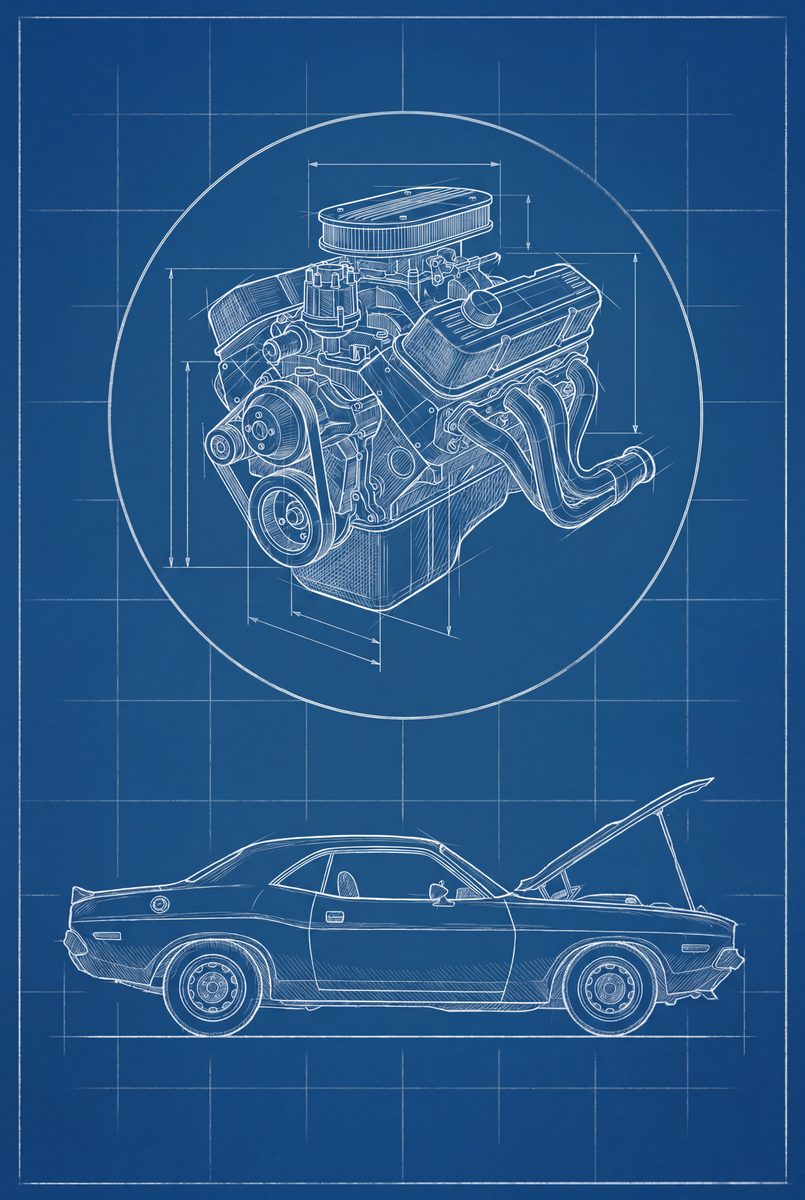
V8 Anatomy is the technical one: an engine drawn in detail above the car that carries it. It is the exception to the warm rule below, because it is a drawing rather than a scene and it wants a black frame, so it is better on the wall by a desk than above a bench.
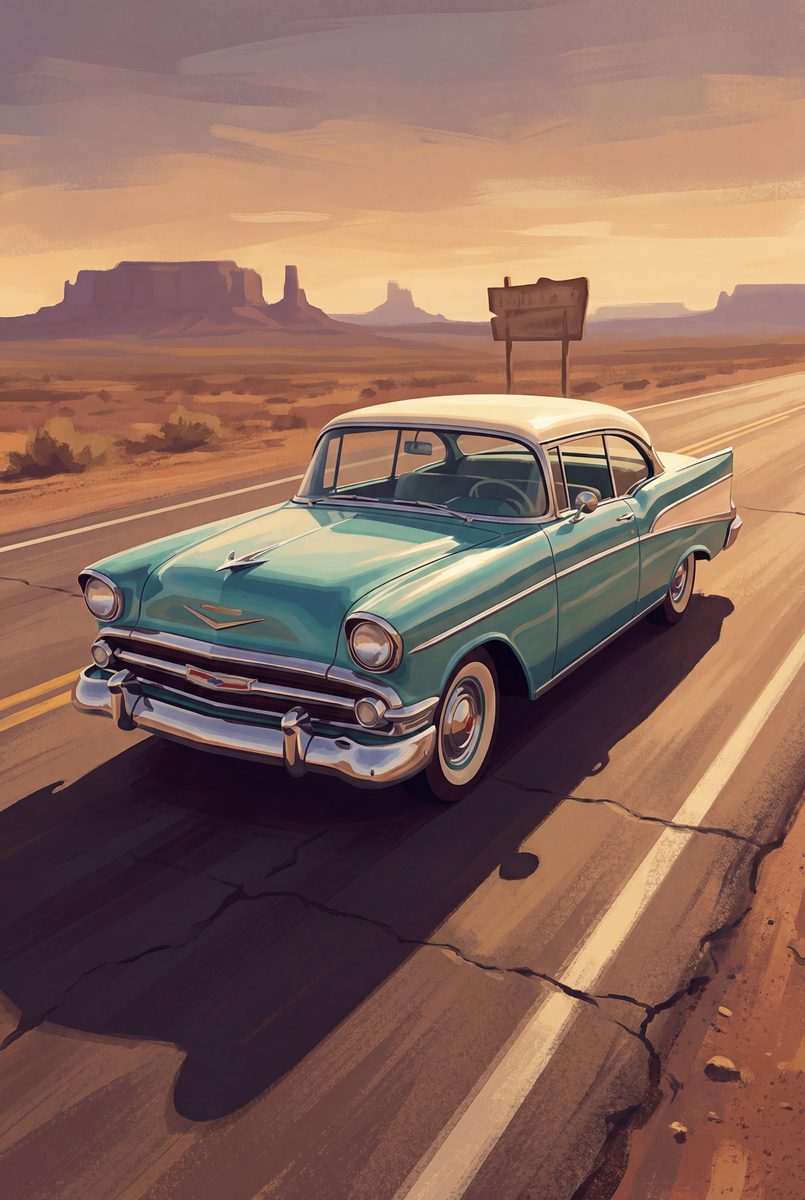
Route Nowhere is the escape picture rather than the work picture: heat, distance and nowhere in particular to be. Put it on the longest wall, where there is room to stand back from it.
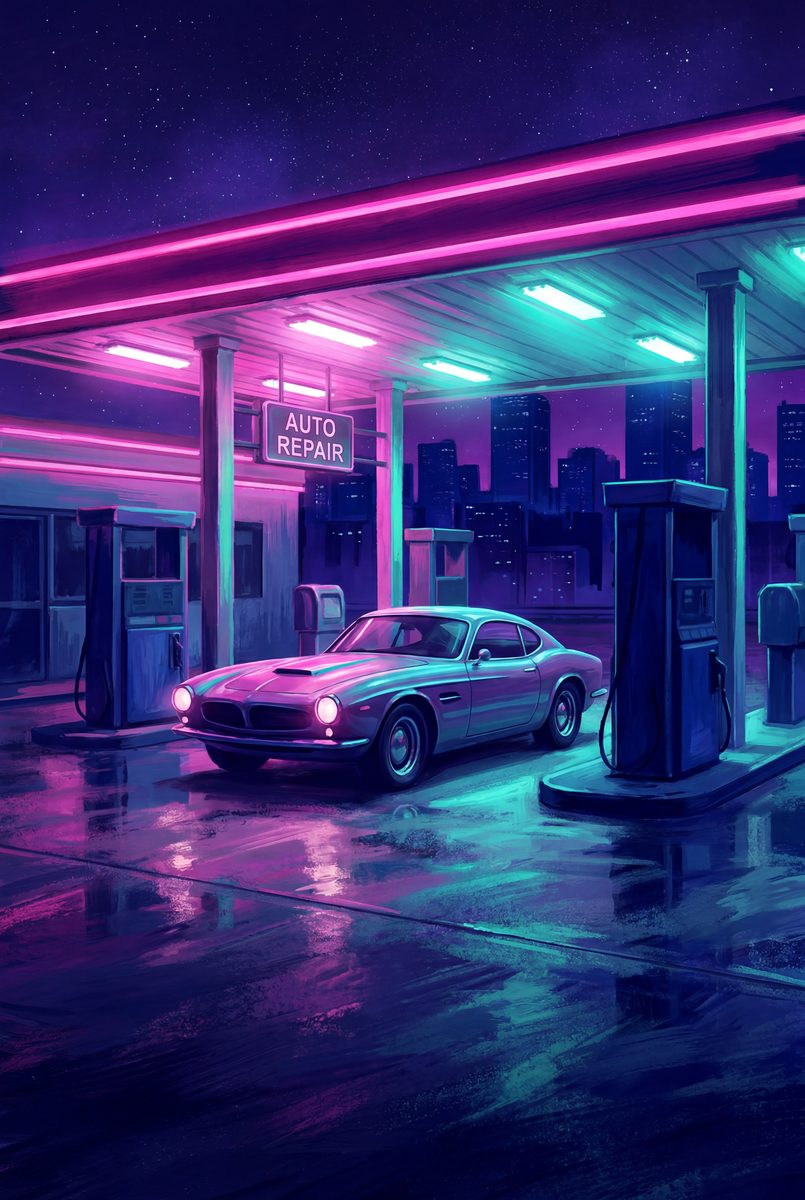
The Last Petrol Station is a forecourt at two in the morning, neon and wet tarmac. Dark, so it needs decent light on it, and it is the one that turns a garage into somewhere you sit rather than somewhere you work.
The practical part
Glazing is the first thing to get right, and the answer is to avoid it. A framed print in a room with an angle grinder in it is a bad idea, and the humidity swings in an unheated garage are unkind to paper behind glass. An unframed poster you can afford to replace in three years is the honest choice, and a canvas is the better one if you want something that looks finished.
Light is the second. Overhead strip lighting is cool and flat, and it drains anything with a cool palette. That is why four of the five above are warm, and it is also why the same picture that looks superb in a living room can look grey in a garage.
Size is the third and it usually needs to go up. There is more distance in a garage than in a hallway, and there is a lot of visual noise around the picture: shelving, tools, boxes. A print that would be comfortable at A3 indoors wants A2 or larger here. The size guide works through it.
Metal is worth considering for the same reasons. It is a three-millimetre panel with no glazing and it does not care about damp, which is unusual in a room like this. The formats page covers what each material does.
If it is a man cave rather than a workshop
Different room, different rules: heated, carpeted, somewhere to sit. The man cave page takes that on, and it is where the darker pictures from the night drives belong rather than here.