The short version. Pixel art only works if the pixels are meant. Scaling a photograph down and back up gives you a blurry photograph; drawing on a grid gives you this. All four were built pixel by pixel, so they stay crisp at print size instead of turning to mush.
The four
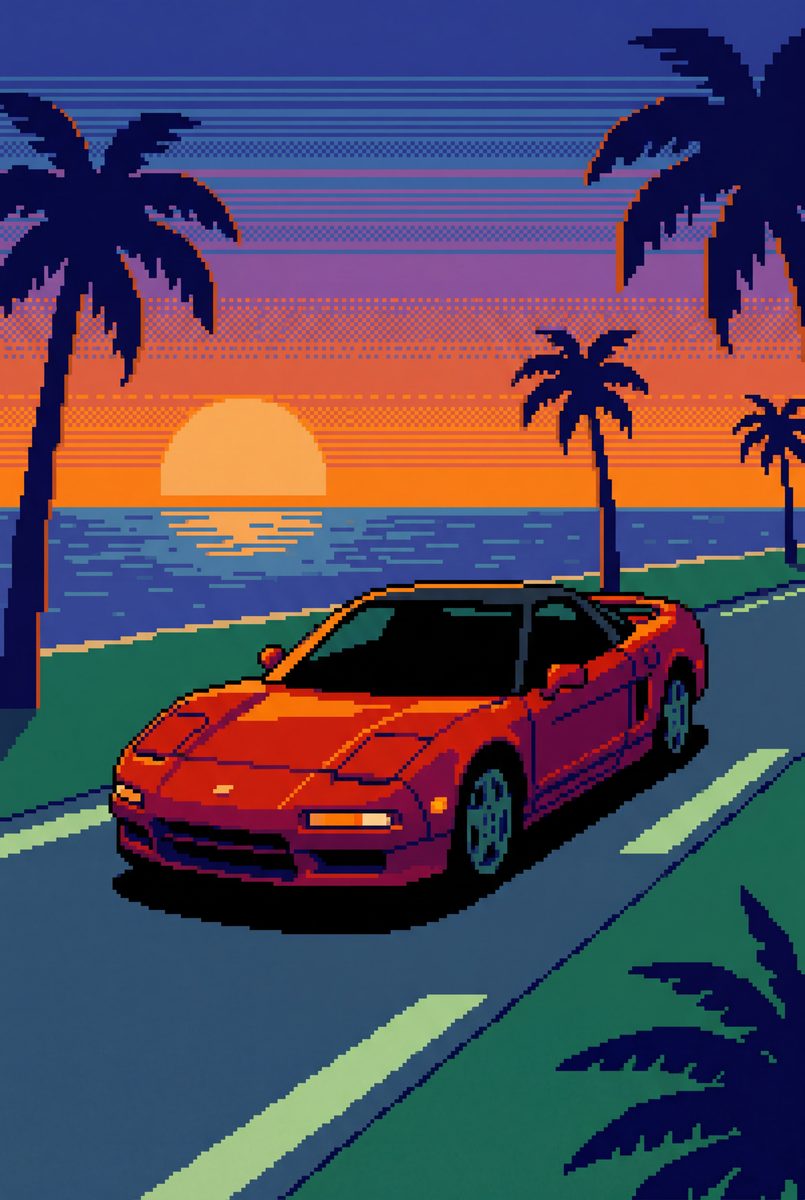
Pixel Sunset Run is a sports coupe on a coastal highway at sunset, in the vibrant arcade palette the era ran on. It is the one that looks most like the memory, because the coastal sunset stage was in more of those games than any other setting.
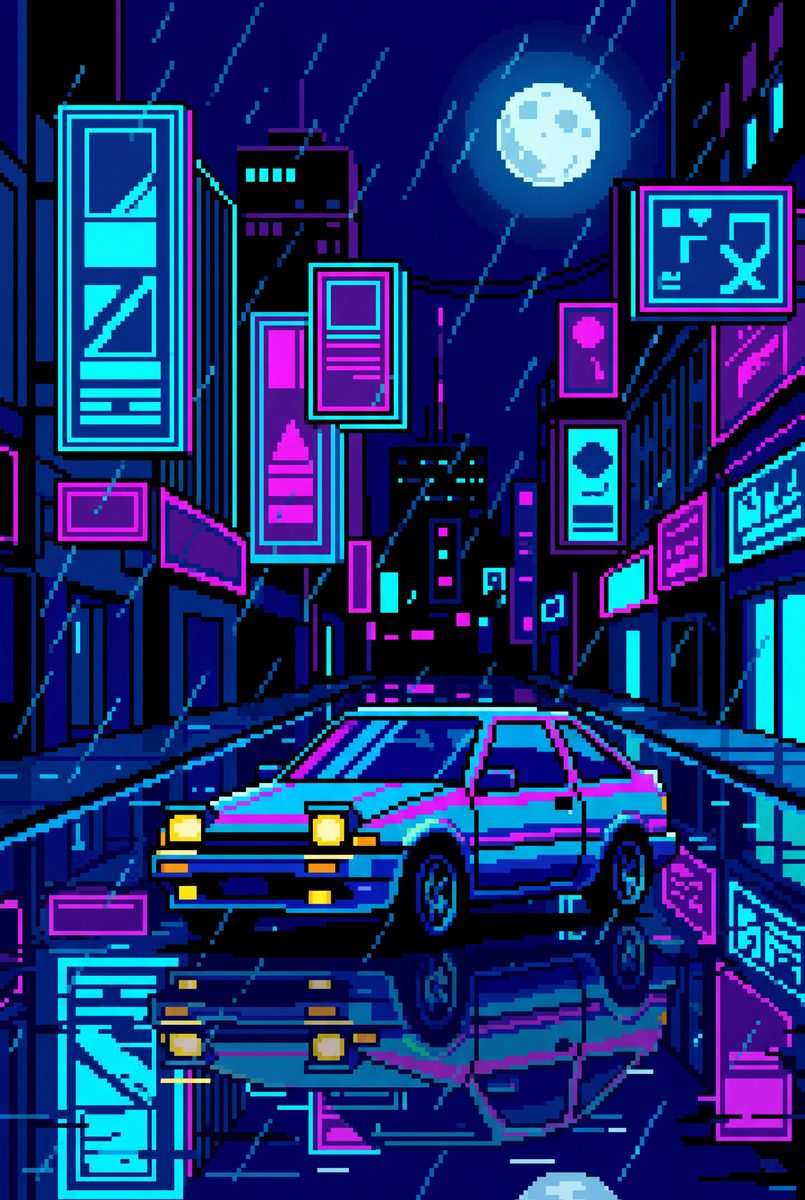
Pixel Night City puts an 8-bit coupe on a neon street with magenta, cyan and pixel rain. Fewer colours, harder edges, and a deliberately earlier generation of the same idea. Hung next to the sunset piece the two of them show the jump between console generations without needing a caption.
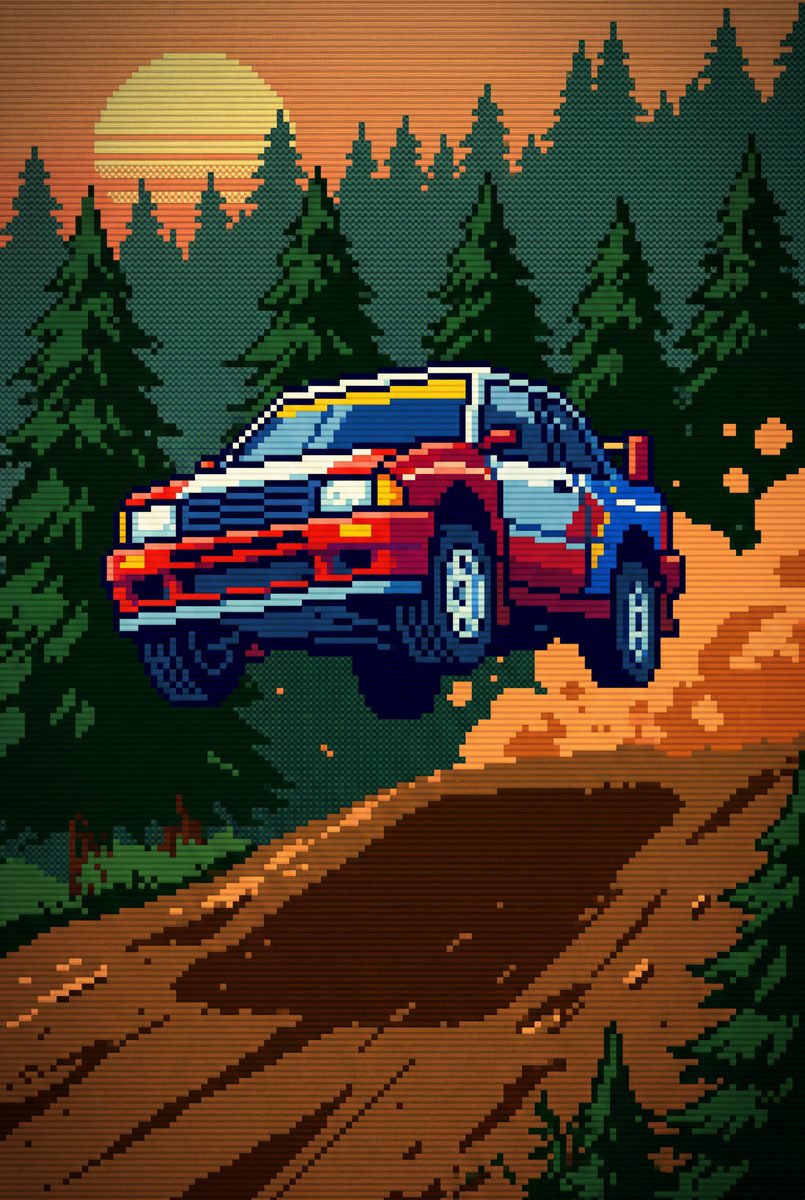
Pixel Rally Stage is a rally car mid-jump on a forest stage with dust and dithered shadow. Dithering, the checkerboard of two colours used to fake a third, is the technique that defines the period, and this is the print where you can see it doing its job.
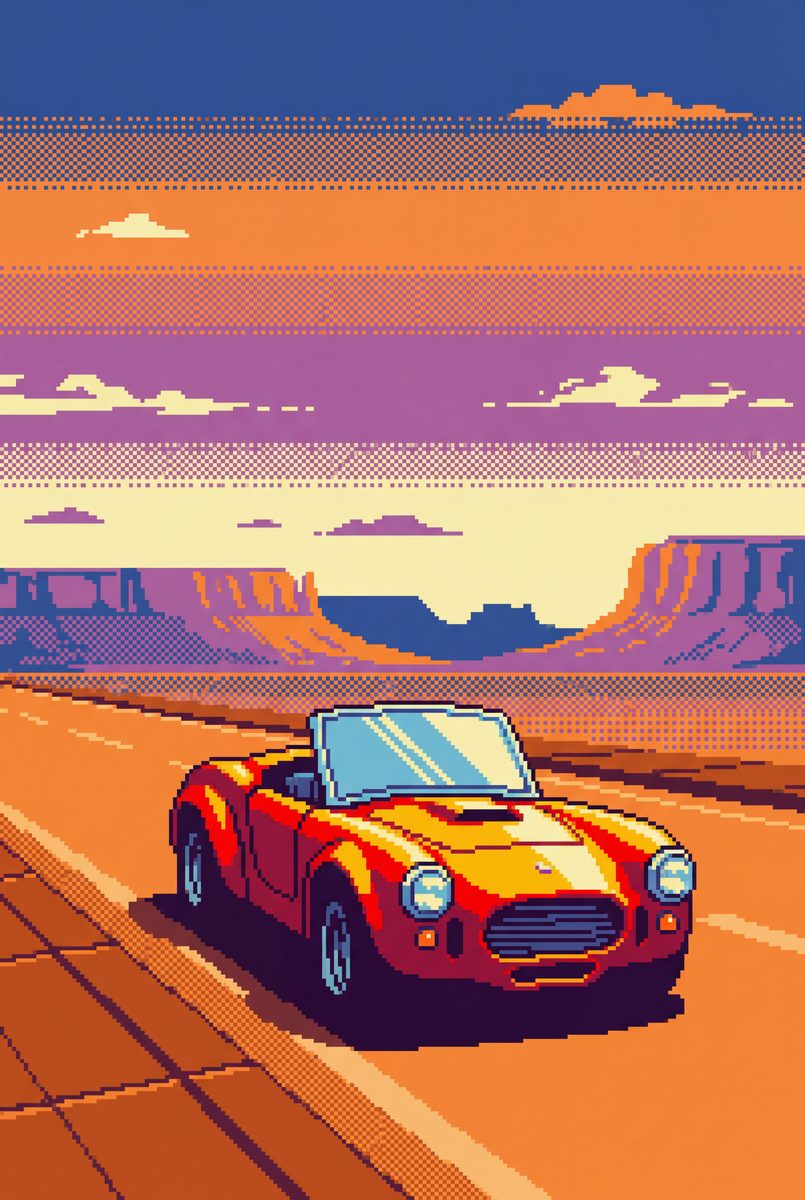
Pixel Roadster is a roadster on an empty desert highway under a big banded sky. It is the calmest of the four and the one that works outside a games room, because the banded sky reads as a colour field from any distance.
Where they belong
These are the pieces that go in a games room, a teenager's room or an office belonging to somebody who is not pretending to have grown out of it. They also survive a small size better than anything else here, because there is no fine detail to lose: an A3 pixel print is a complete picture, where an A3 blueprint is a compromise.
Colour is the planning problem rather than size. All four are saturated, so they want a plain wall and a plain frame, and black is the safe choice. If you want the same nostalgia in a quieter register, the single-line set covers similar decades with none of the colour. If it is the night-time palette specifically, the night drives do it photographically instead.
Your own car can be rendered in a period style from a photograph through the Paint Shop, though the pixel treatment is not one of the nine, so pop art is the closest thing to it. The wall covers sizes and frames.