The short version. Most car posters show the outside of a car in nice light. These show the inside, the layout and the air, in the visual language of a drawing office. They suit people who like machines for how they work rather than for how they look, which is a different customer and a different wall.
Four drawings, four subjects
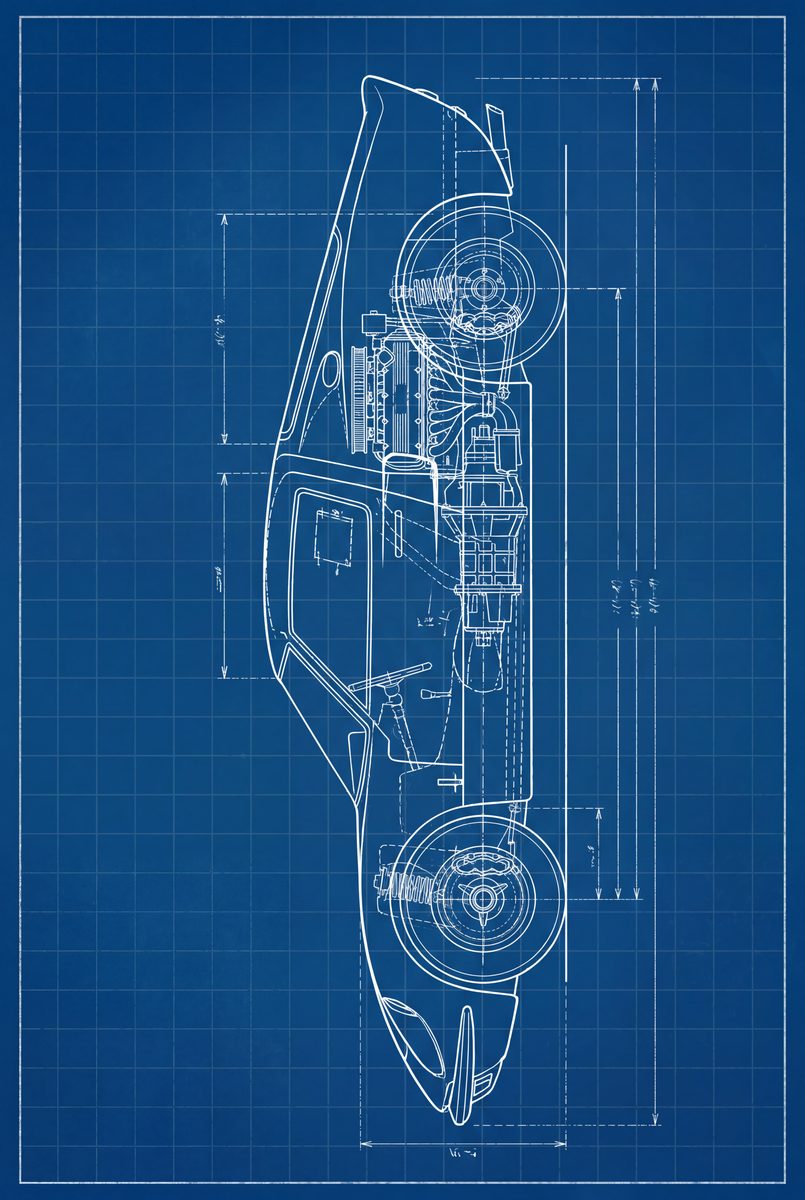
Rear-Engine Study is a cutaway of a 1960s rear-engined coupe with the engine, gearbox and suspension drawn in fine white line. Putting the engine behind the driver changes everything about how a car behaves, and a cutaway shows you why in a way no photograph can: you can follow the mass sitting over the back axle and understand the handling without anybody explaining it.
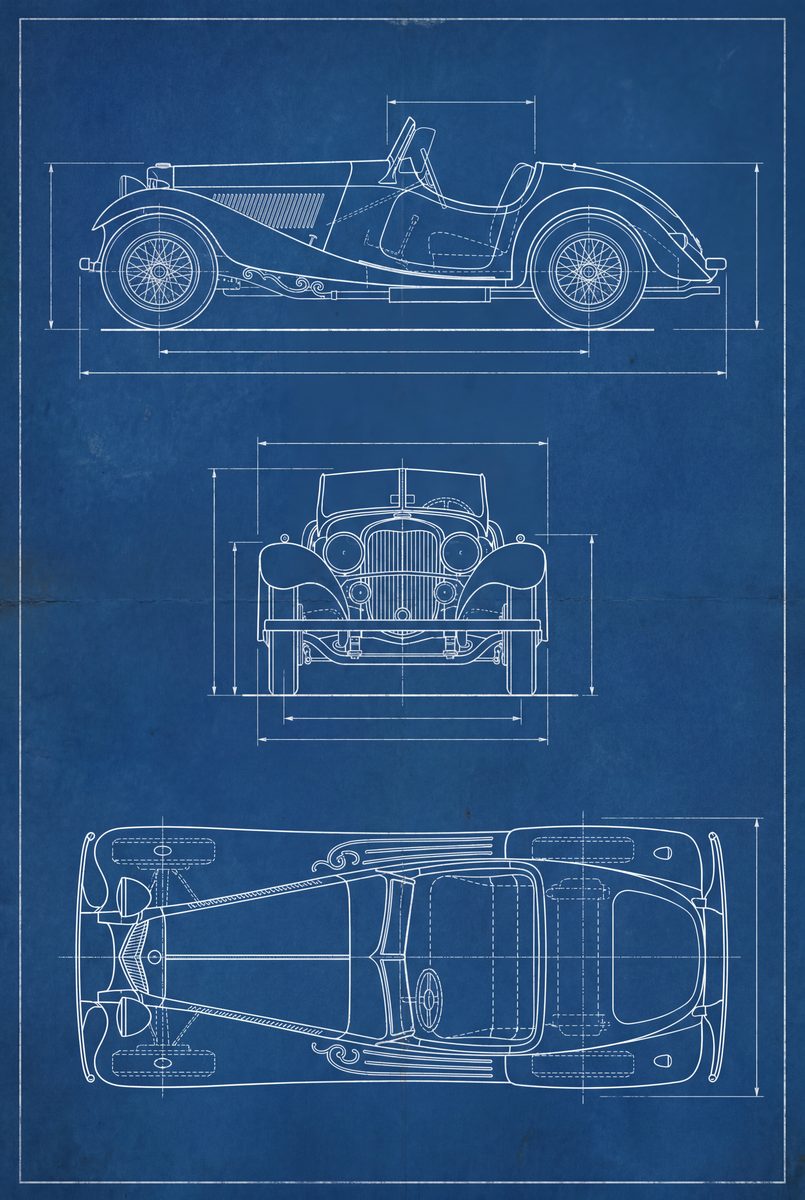
The Roadster, to Plan is drawn patent-style in three orthographic views, side, front and plan, on engineering blue. This is the oldest convention in the book and it survives because it works: three flat views give you the proportions of a car with no lens and no flattering angle involved.
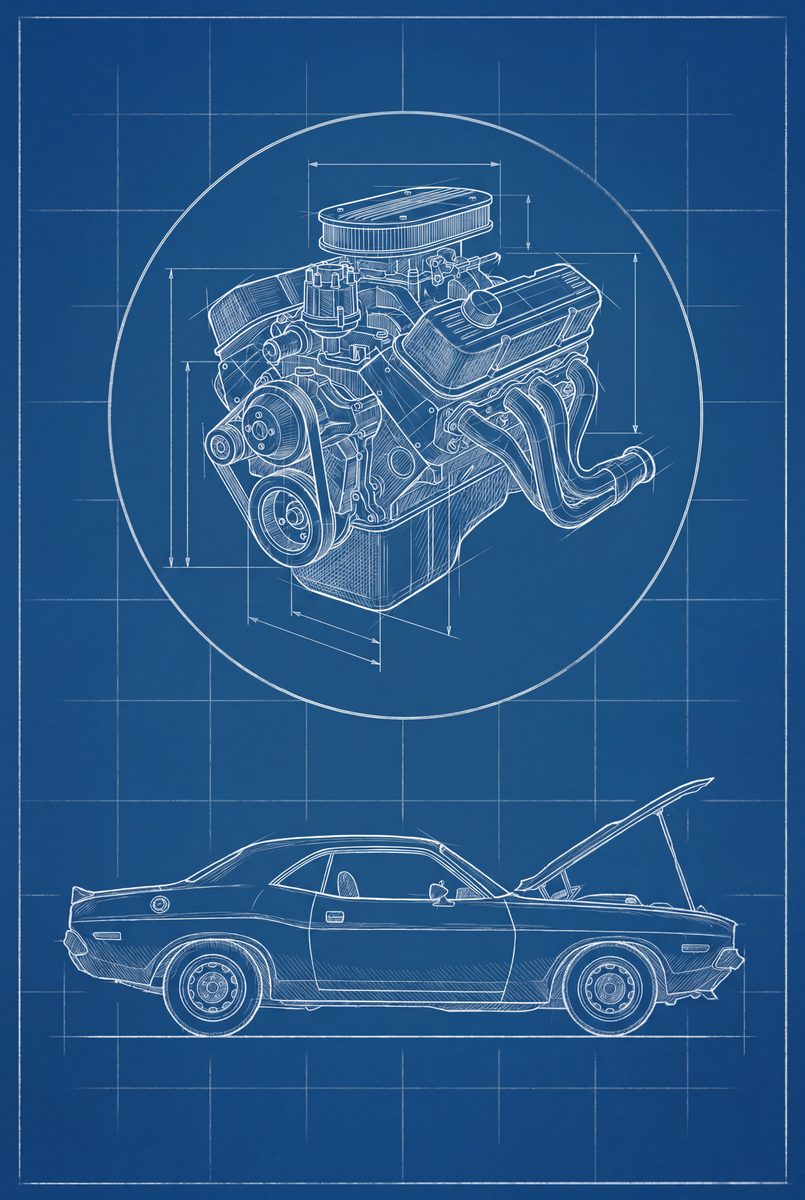
V8 Anatomy opens the bonnet. A muscle-era V8 drawn in detail above the car it sits in, so the relationship between the engine's bulk and the body's proportions is the whole picture. If somebody has ever described an engine as the reason they bought a car, this is that sentence as a drawing.
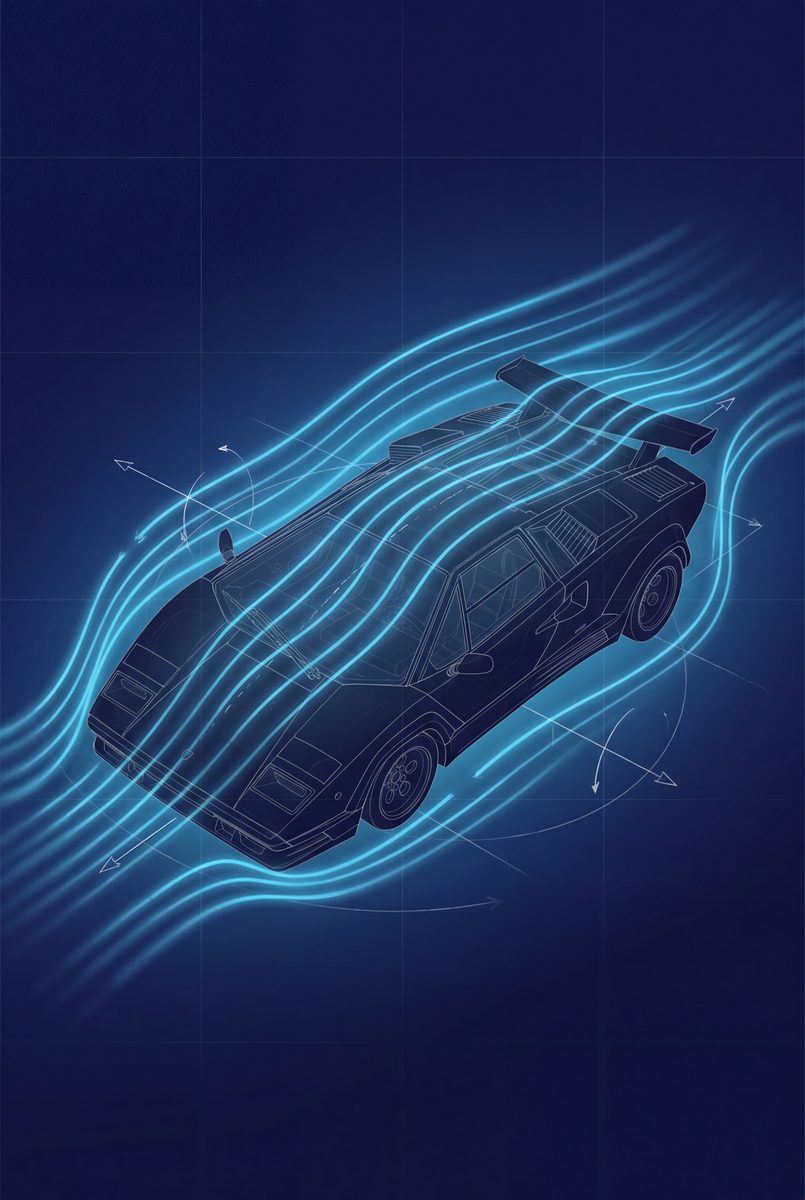
Aerodynamica is the one that is not about parts at all. Cyan streamlines flowing over a wedge-era silhouette: the wind tunnel drawn as the thing being studied. Air is the last invisible component in a car, and this makes it the subject.
Where blueprint art works
These are the pieces that end up in offices and studies rather than living rooms, which is worth knowing before buying one as a gift. The blue is dark and cool, so it fights a warm room and it sits comfortably next to a monitor. A black frame is the natural pairing because it continues the linework rather than interrupting it, which the wall stage goes into.
Detail is the other consideration. The linework on all four is fine, and it only really rewards you from A2 upwards, where you can read the hatching from a normal standing distance. The wall sets out what that means for a given wall.
Related ways of looking
If it is the reduction rather than the engineering that appeals, the minimalist line work takes the opposite route to a similar place: one line instead of hundreds. If the appeal is the machinery under the bonnet specifically, the workshop and barn scenes put the same interest somewhere oily rather than in a drawing office. And your own car can be redrawn this way from a photograph through the Paint Shop, which has a blueprint style.