Read this one for the craft. If your question is which room a line drawing belongs in rather than how it is made, the minimalist page takes these same four pictures and answers that instead.
What a silhouette is actually made of
Strip a car back to an outline and about four decisions carry the whole thing. Where the wheels sit relative to the body, because that one proportion is most of what dates a car. How the roofline meets the boot, which is the difference between a saloon, a fastback and a coupe. The overhang at each end. And the height of the waist, the line along the bottom of the windows, which is why older cars look airy and newer ones look armoured.
Get those four right and you can leave everything else out. Get one wrong and no amount of detail rescues it, which isn't how a detailed drawing behaves at all.
A silhouette and an outline are not the same thing
An outline traces the edge of a shape. A single continuous line has to travel through the shape, describing the wheel arch, the screen and the tail without lifting, which forces the drawing to make decisions about what matters. That constraint is the point: it's why one-line work looks considered and traced outlines look like clip art.
The four, and what each one is about
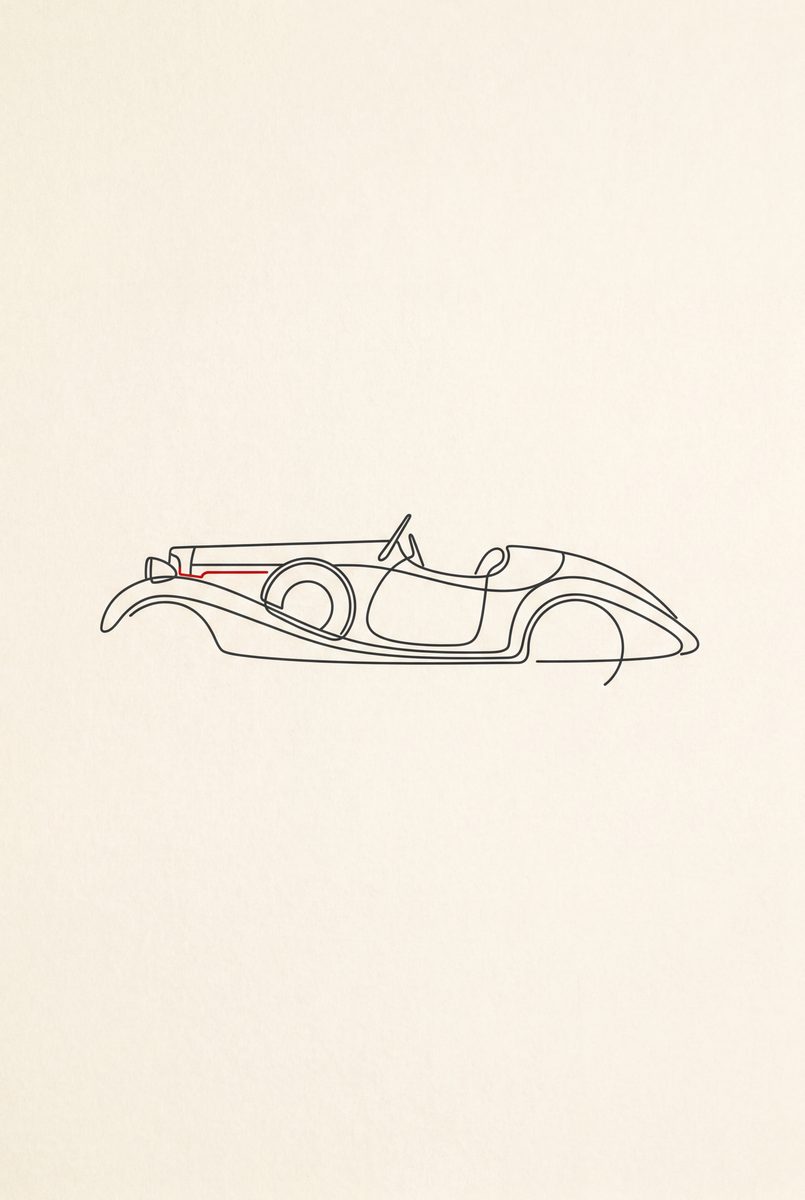
1930: The Roadster is all overhang and separate wings, with an exposed spare wheel, from the era when a car was a chassis with bodywork placed on it. A single red accent.
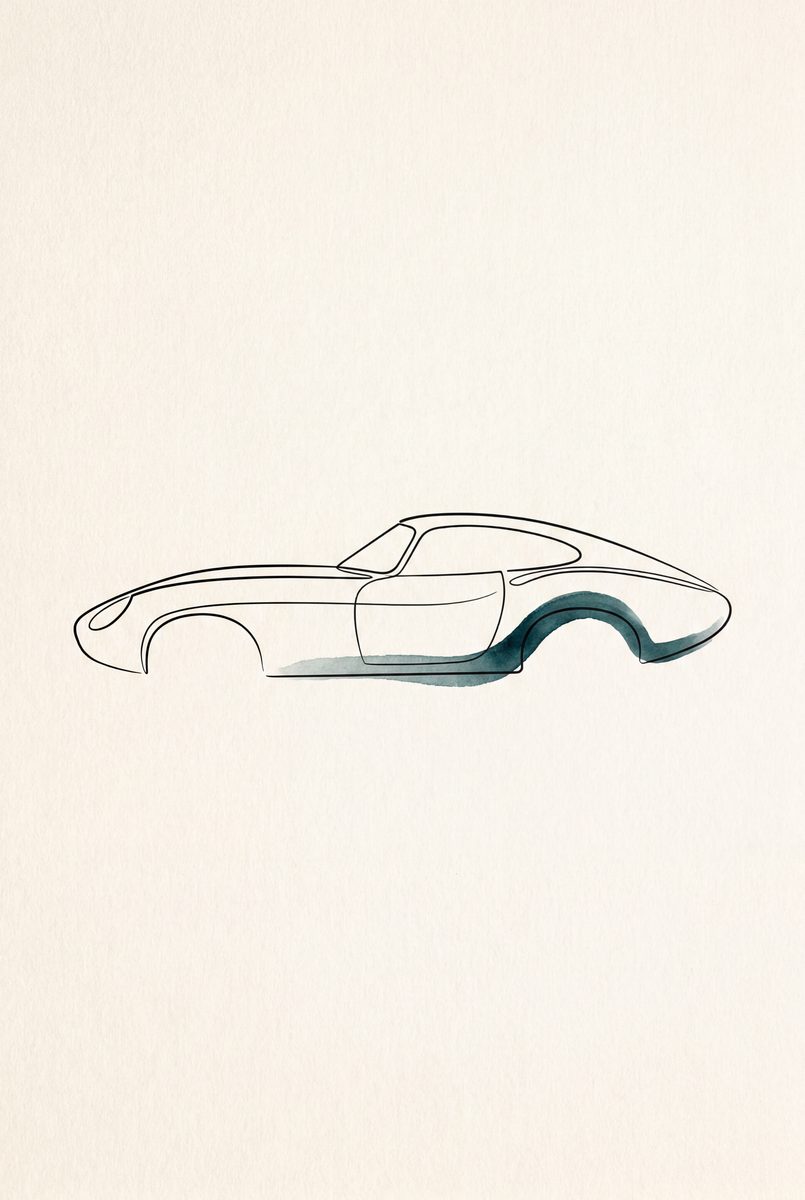
1965: The Coupe is the long bonnet and the unbroken fastback roof, the decade the proportions stopped being incidental and became styling. Teal on the wheel arc.
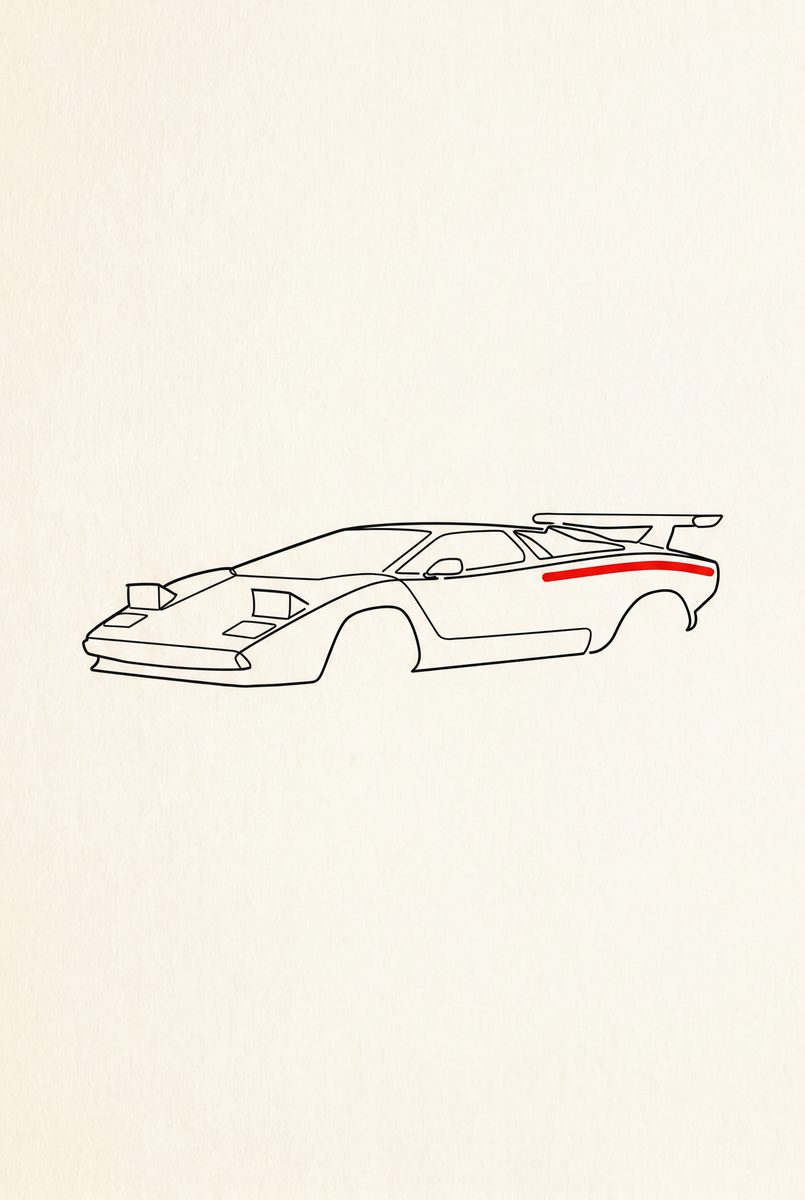
1985: The Wedge is the flat plane and the pop-up lamps, which existed because the designers wanted a nose lower than a headlamp is tall. Red on the wing.
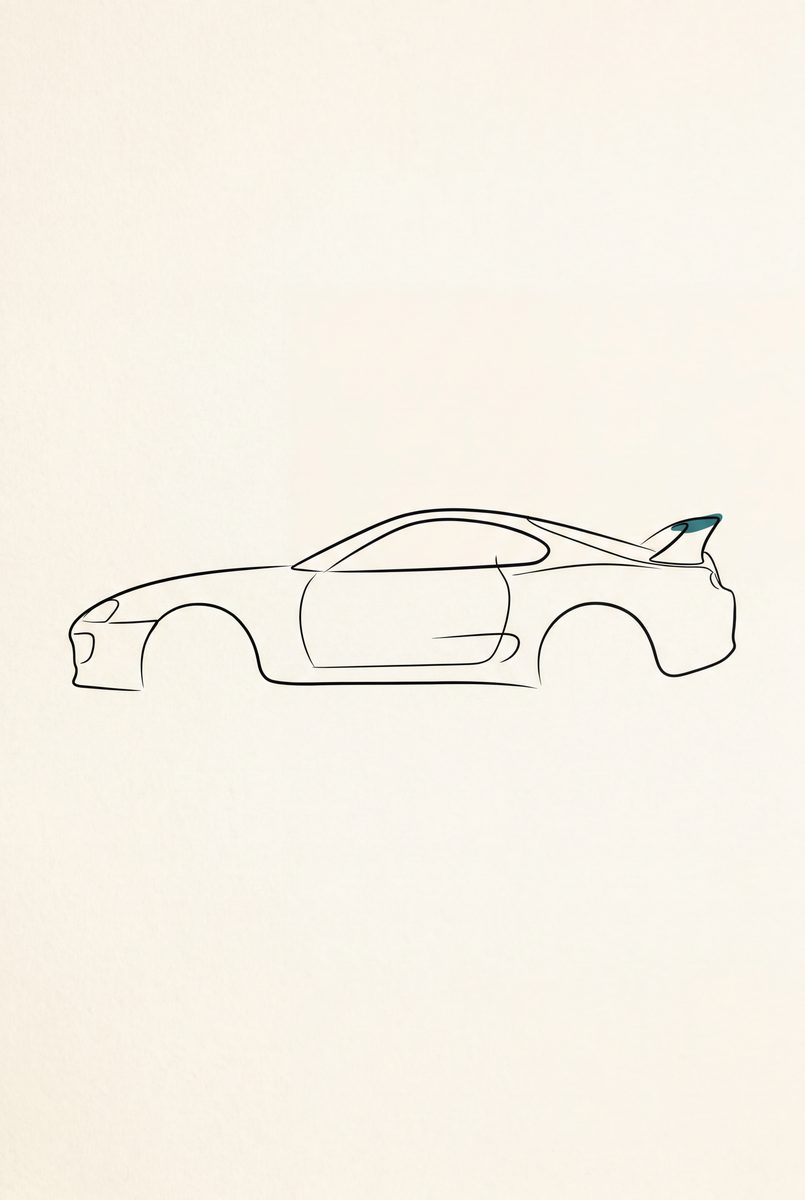
1995: The Icon is the smooth canopy and the large rear wing, when aerodynamics stopped being a styling idea and started being a measurement.
Yours as one line
The single-line style is one of the nine in the Paint Shop, so a photograph of your own car can be reduced the same way. It's the style that flatters an ordinary car most, because proportion is all that survives and a well-proportioned everyday car draws beautifully.
The opposite approach, hundreds of lines instead of one, is on the blueprint page. The wall covers size and framing.