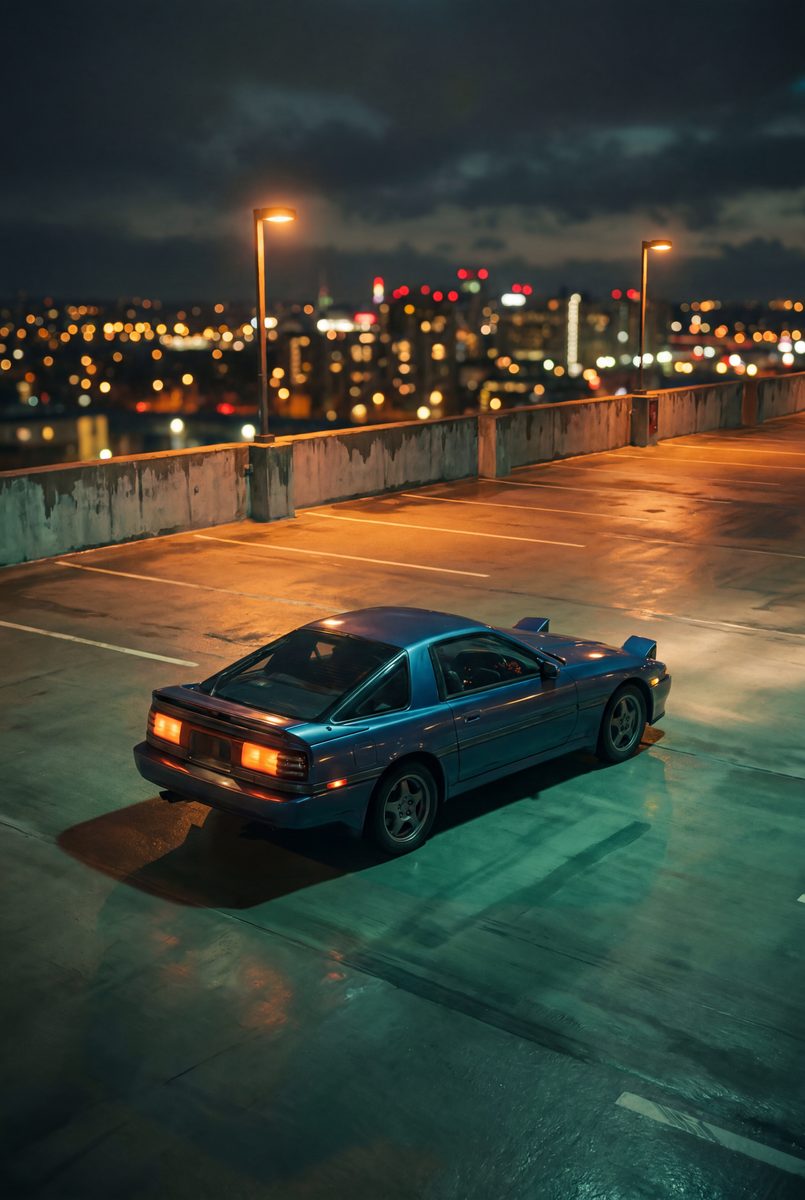
The short version. These are mood pictures, not car pictures. Four of the five are mostly light: sodium orange, magenta, cyan, and a lot of black between them. They belong in a room you can turn the lights down in, and they are wasted on a bright kitchen wall.
The five
Kanjo Glow is the purist's one. Top deck of an empty multi-storey at one in the morning, a nineties coupe under sodium light, teal in the shadows. Nothing is happening, which is the point: the culture this comes from was mostly about turning up somewhere and standing about.
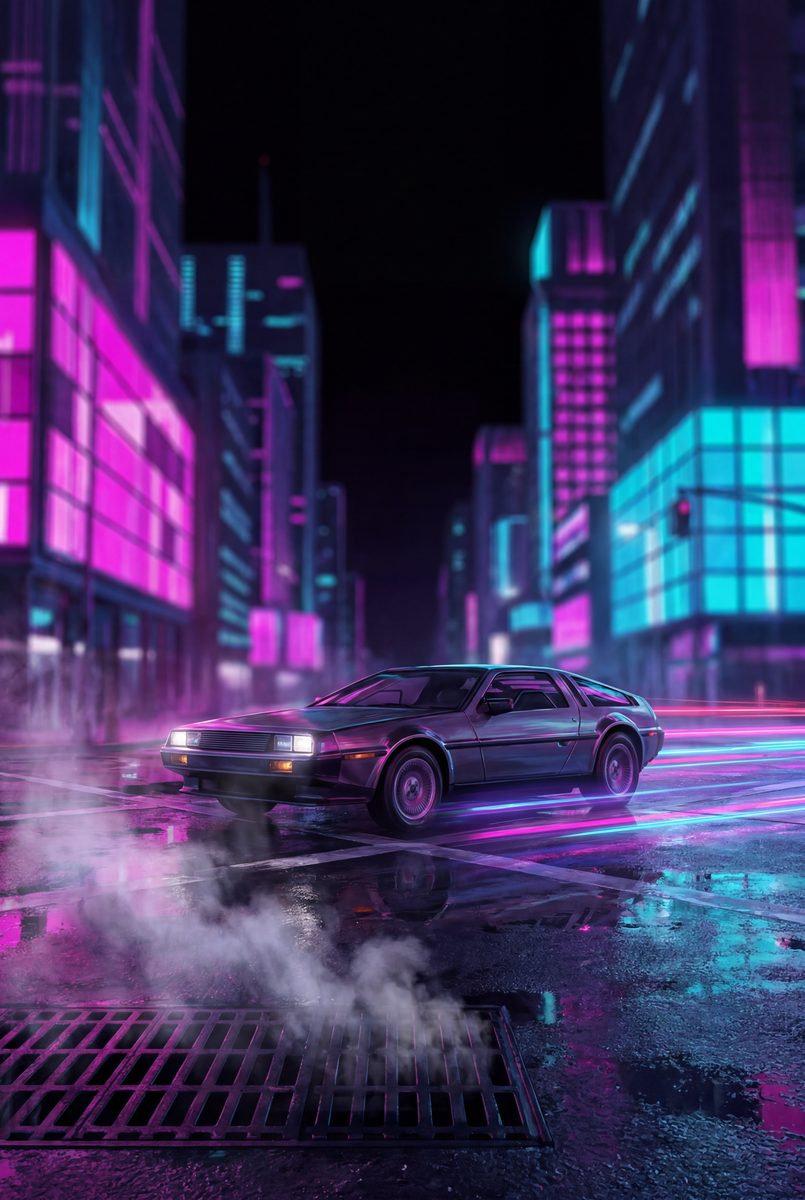
Neon Rain is a low coupe on a rain-slicked street with magenta and cyan smeared across the wet. Step back from it and the reflections stop being reflections and become colour, which is not true of anything else in the night drive set.
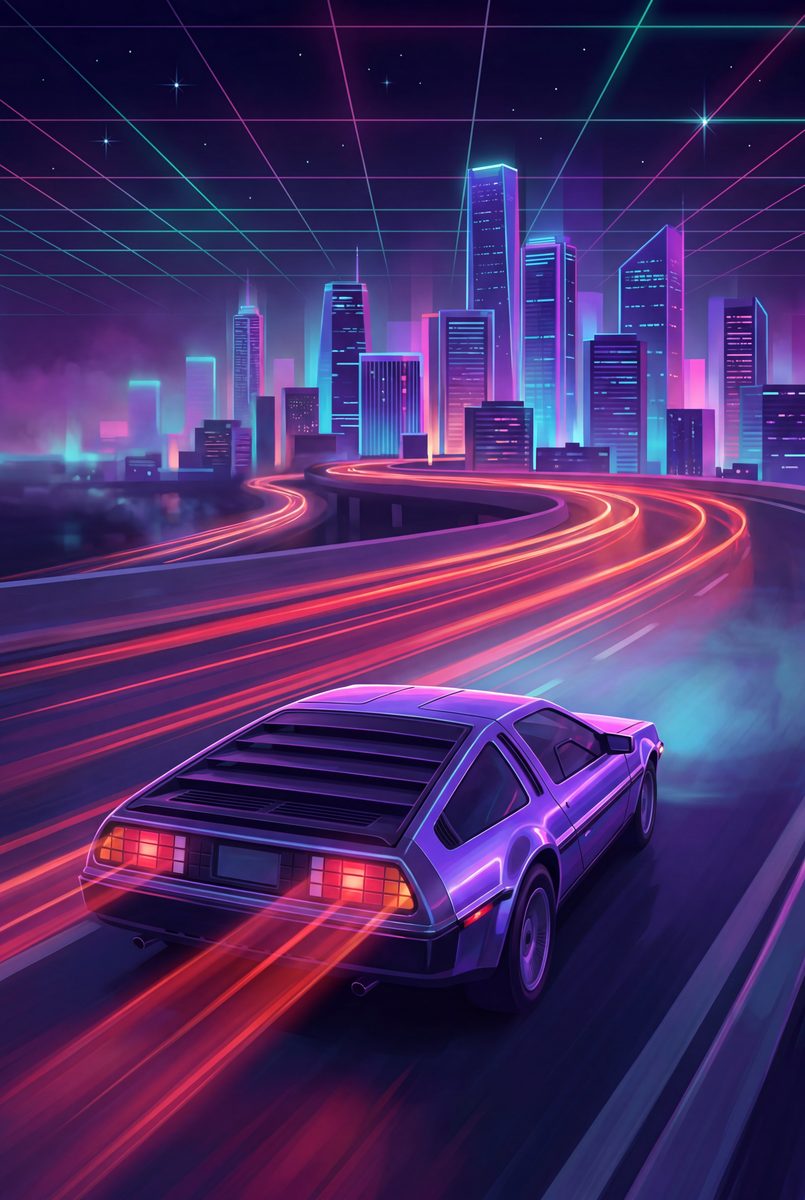
Midnight Expressway is taken from the top of an elevated road, tail-light ribbons sweeping toward a skyline. There is no hero car in it at all. If you want the feeling without a specific machine in the frame, this is the one.
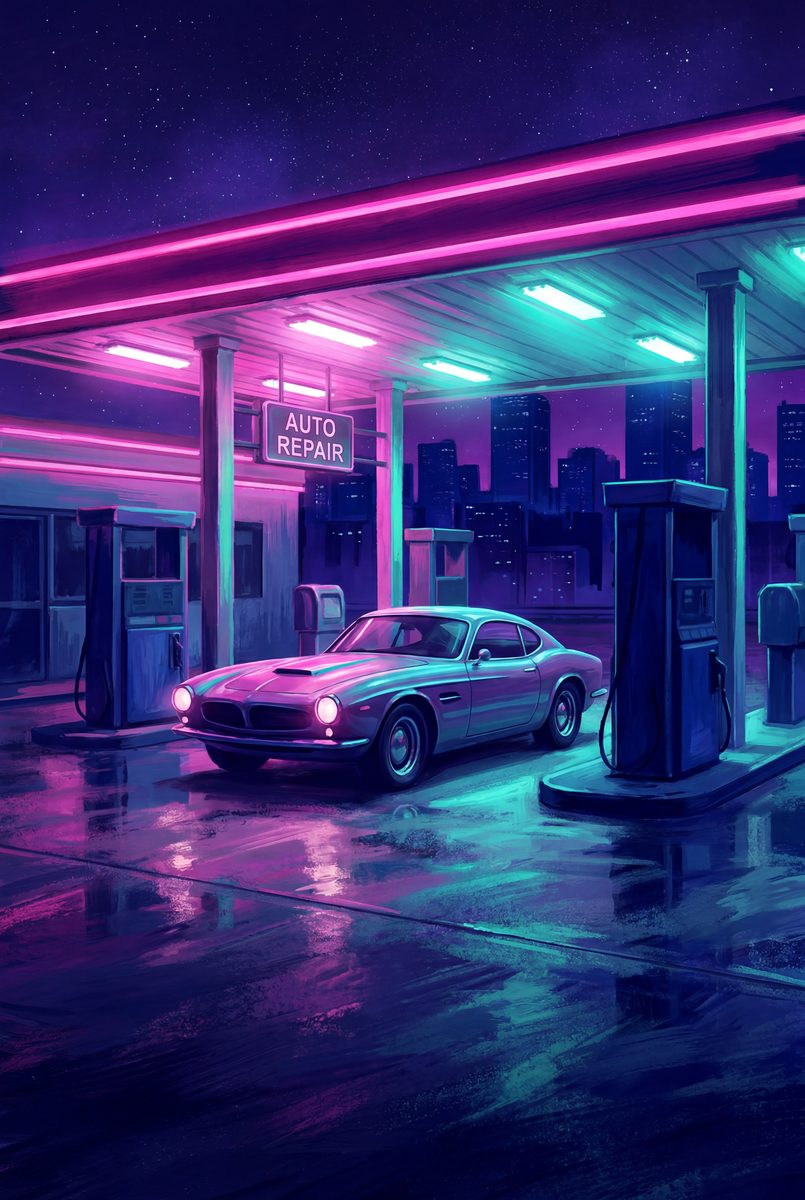
The Last Petrol Station is a lone classic under a forecourt canopy at two in the morning, neon overhead, wet tarmac underneath, nowhere to be. It is the odd one out, because the car is not Japanese and not from the nineties, and it belongs here anyway on atmosphere alone.
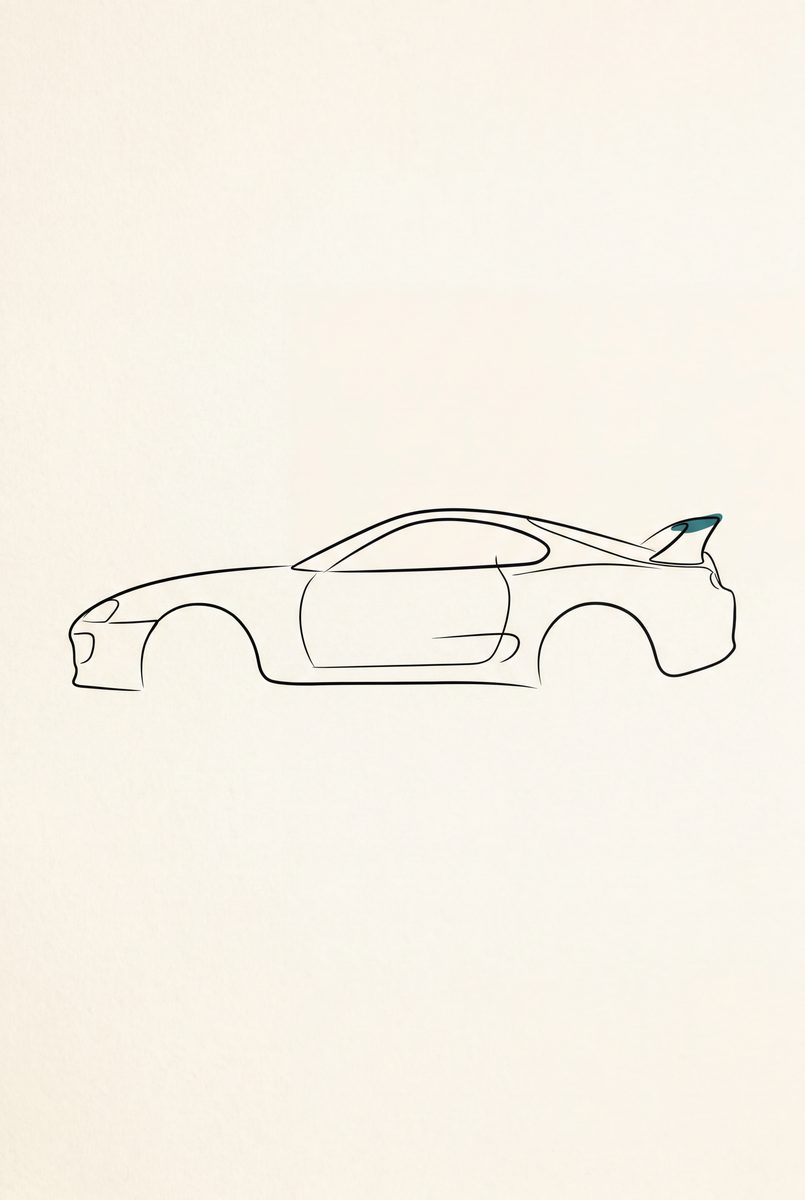
1995: The Icon is the sober option: the same era's performance coupe, smooth canopy and big rear wing, drawn as a single line on cream. It is here for anybody who wants the decade without the neon, and the rest of that set is on the minimalist page.
What JDM does and does not mean
Strictly the letters stand for Japanese Domestic Market, which describes where a car or a part was built to be sold rather than a style. The way enthusiasts use it, it has come to mean a whole strand of engineering and the scene around it. That distinction has a page of its own, and it is worth two minutes before you buy something described as JDM anywhere.
None of these five carries a badge, a model name or a livery. The cars are original designs, which for this genre matters more than most: the specific nineties heroes are exactly the shapes that get traced and sold without permission.
Hanging them
Dark pictures need a black frame and they do not want glass opposite a window, because there is enough dark area in each of them to turn a frame into a mirror. Canvas is the honest alternative on a glare-prone wall. The wall works through both.