Every figure on this page comes from the DVLA's vehicle licensing statistics, table VEH1111 (licensed vehicles by body type, fuel type and year of first use), Great Britain, cars, at the end of December 2025. The figures are in thousands, exactly as the DVLA publishes them, and are shown to one decimal place for the same reason.
The frame around them: 30,189 thousand cars held a licence in Great Britain at that date (table VEH0103), and 8,460.1 thousand of those were more than thirteen years old (table VEH1107). Against that, the cars from the 1970s that still hold a licence number tens of thousands (94.2 thousand for the whole decade), and the further back you go, the smaller and stranger the numbers become.
A present for the petrolhead who has everything: their own car, repainted from one photograph and previewed first.
From £19.99 · Poster
The table: cars licensed by year of first registration, 1950 to 1999
| Year of first registration | Cars still licensed (thousands) |
|---|---|
| 1950 | 1.4 |
| 1951 | 1.6 |
| 1952 | 1.8 |
| 1953 | 2.8 |
| 1954 | 3.3 |
| 1955 | 3.8 |
| 1956 | 3.0 |
| 1957 | 3.0 |
| 1958 | 3.9 |
| 1959 | 4.9 |
| 1960 | 5.7 |
| 1961 | 5.3 |
| 1962 | 5.2 |
| 1963 | 6.7 |
| 1964 | 7.2 |
| 1965 | 7.1 |
| 1966 | 8.0 |
| 1967 | 9.3 |
| 1968 | 10.5 |
| 1969 | 9.6 |
| 1970 | 10.7 |
| 1971 | 11.5 |
| 1972 | 15.9 |
| 1973 | 13.8 |
| 1974 | 8.7 |
| 1975 | 6.1 |
| 1976 | 5.7 |
| 1977 | 6.5 |
| 1978 | 7.6 |
| 1979 | 7.7 |
| 1980 | 7.1 |
| 1981 | 5.5 |
| 1982 | 5.3 |
| 1983 | 6.9 |
| 1984 | 5.8 |
| 1985 | 3.7 |
| 1986 | 4.0 |
| 1987 | 4.9 |
| 1988 | 6.3 |
| 1989 | 8.6 |
| 1990 | 9.0 |
| 1991 | 8.0 |
| 1992 | 7.1 |
| 1993 | 7.8 |
| 1994 | 9.0 |
| 1995 | 11.7 |
| 1996 | 14.8 |
| 1997 | 22.4 |
| 1998 | 30.1 |
| 1999 | 38.9 |
Older still
The DVLA's table runs back to 1900, and for cars it publishes a figure for every one of those years: none of them is marked [low] in the 2025 column. The numbers are simply very small, and they are given to three decimal places of a thousand, so they are counts of individual cars, not statistical rounding. By decade of first registration: 1900s 102 cars, 1910s 110, 1920s 5,130, 1930s 21,086, 1940s 4,900. The 1930s are the pre-war peak, topping out at 2,933 cars first registered in 1934, and the war years are the floor: 12 cars from 1944, 13 from 1943.
Three caveats the DVLA itself attaches
Licensed is not on the road. A licence can be held on a car that lives in a garage. These figures say how many cars hold an active vehicle licence, nothing more.
First use is not always the year of the car. The DVLA's note: imported vehicles, and pre-1973 vehicles that were unregistered in 1973 but later registered again, all appear under unknown or later first-use dates, so their age is older than the table says.
The units are thousands to one decimal. 13.8 means between roughly 13,750 and 13,850 cars. It is a government statistical series, not a club census.
The bump at 1972 and 1973
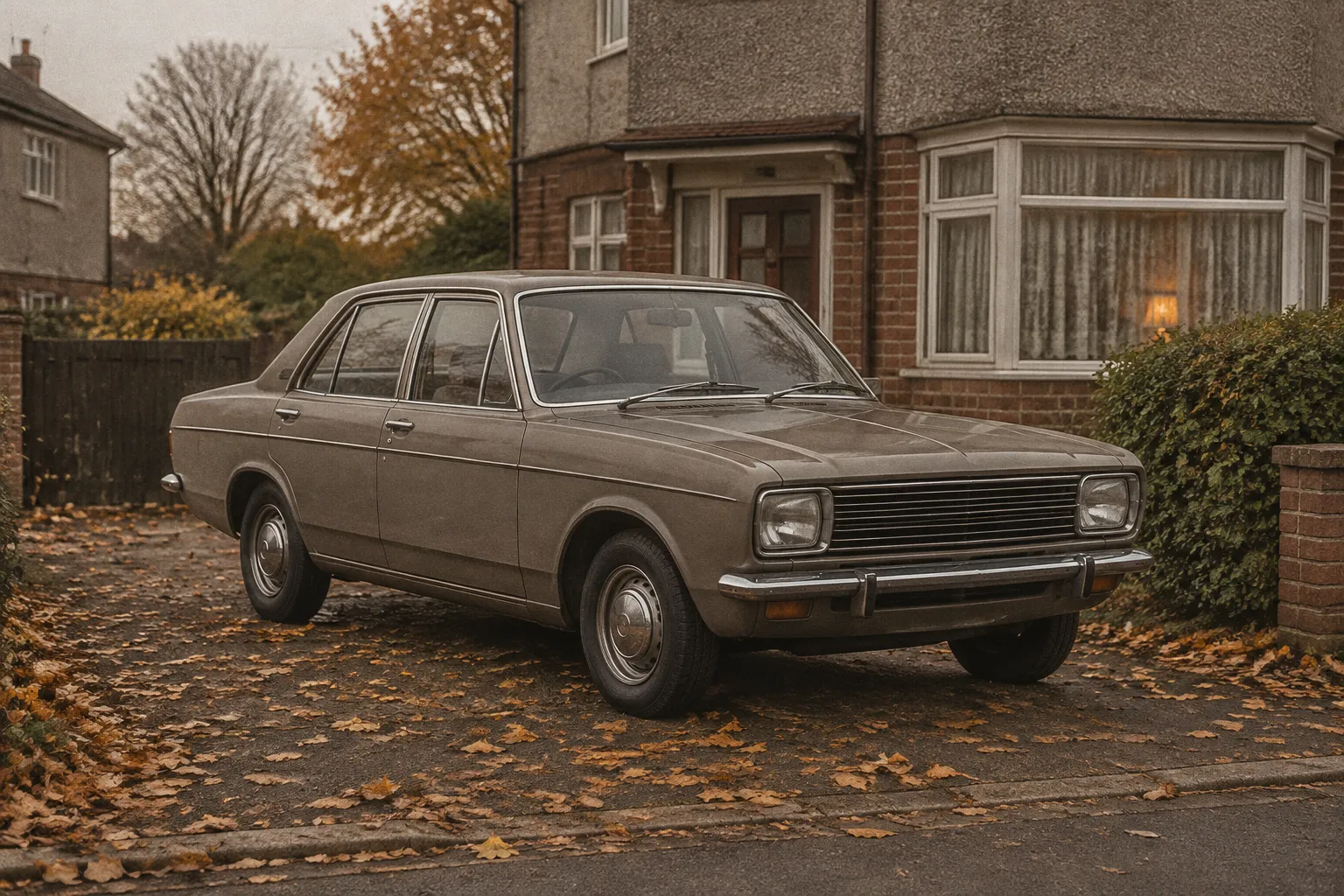
Look at the table and one pattern stands out: 1972 shows 15.9 thousand and 1973 shows 13.8 thousand, with the years either side running 5.7 to 8.7. The data does not state why. What is true nearby, on GOV.UK's historic vehicles guidance (read 8 September 2026): a vehicle built or first registered more than 40 years ago needs no MOT, and vehicles built before 1 January 1986 stop paying vehicle tax from 1 April 2026. The rolling exemptions sit in exactly this window of years, and we leave the explanation as an observation, not a claim. Which cars cross the tax line next, by make and model, is on cars turning historic.
Decades at a glance
- First registered before 1960 (every year from 1900 to 1959): 60.8 thousand
- 1960s: 74.5 thousand
- 1970s: 94.2 thousand
- 1980s: 58.2 thousand
Totals are our arithmetic over the DVLA's published figures at their full precision, then rounded once at the end. Adding up the one-decimal figures in the table above instead gives answers a tenth or two adrift, which is why they are done from the source, not from the printed table.
What the numbers are for
The numbers describe the fleet that survives; the posters on this site describe the cars people can't stop thinking about: British classics, American road-trip metal, V8-era muscle. One is a census, the other is the reason anyone cares about one.
If you would rather read in order, the guides index holds everything else on the site.
Written by Craig Fearn, Petrol & Ink. Last updated .